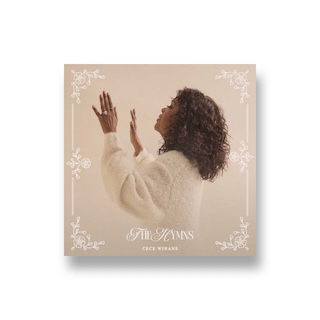
 THE HYMNS
CeCe Winans
Fair Trade Services
By David McGee
In an interview published in the July 10 edition of The New York Times, our Bob Marovich opened by pointing out the fruits of gospel giant CeCe Winans’s 30-year -plus career, specifically chart topping achievements on the gospel, Christian, and R&B charts with praise songs framed in celebratory, propulsive arrangements alongside more subdued, atmospheric, deeply interior—you might say “prayerful”—styles for the moments, as Ms. Winans tells Marovich, “when your heart is heavy, you need to steal away and hear from the Lord.” As it came to be a dominant force in gospel music, Winans’s music was enthusiastically embraced by sacred and secular fans alike, “an easy on-ramp to fans of popular secular music,” as Marovich put it.
With all her accomplishments, with all the music she has recorded and performed, her latest album, simply titled The Hymns, is arguably her finest, her monument, a pinnacle of her artistry and her unswerving devotion to her faith. Long ago she arrived at the mountaintop of being the closest contemporary equivalent to Mahalia Jackson as a gospel artist of formidable moral authority and wide ranging, rousing secular appeal. This past June The Hymns made its debut on Billboard’s Gospel chart at #1, giving her an even dozen chart toppers in her career. To Marovich she professed to “enjoy making disciples,” adding, “I enjoy pouring into the next generation.”

‘Blessed Assurance,’ CeCe Winans, from The Hymns

‘Amazing Grace,” CeCe Winans, from The Hymns
In “pouring into the next generation,” Ms. Winans adopted the Mahalia template—forsaking house wrecking contemporary Christian arrangements for the simple backing of piano (the spirit of Mildred Falls lives!) and organ and leaning on her durable voice to convey the depths of faith and the soul-baring pleas for salvation, comfort, and strength through all manner of doubt and distress, personal and spiritual. Although there is a smattering of solemn guitar, subdued percussion, restrained background vocalist and handclaps here and there, the aim, according to CeCe’s keyboardist and co-producer Thomas Hardin Jr., was to deliver a “very intimate album—it was about the original vision: great melody and CeCe’s amazing voice.”
These are serious hymns, with 14 of the 16 originating as poems in the 18th and 19th centuries before music was added. Several of the poets and composers were men and women in great duress (consider Horatio Stafford, the lawyer who wrote “It Is Well” in 1873, two years after the deaths of his young son and four daughters along with the loss of his real estate fortune). The lone 20th century hymn, “Great Is They Faithfulness,” by American poet-Methodist minister Thomas Chisholm, who was afflicted by ill health through most of his life, dates from 1923; the album closer is a familiar seasonal song, a true sacred Yule standard, “The First Noel,” which dates to the 1600s or 1700s, which here sounds a soothing benediction in the wake of the preceding turmoil.
Consider the origins of each hymn:
Blessed Assurance—Fanny Crosby & Phoebe Knapp, 1873. Blinded in infancy, Crosby became a prolific composer of hymns and gospel songs, credited with more than 8,000, with 100 million copies printed, leading to her being referred to in her time as the “Queen of Gpspel Songwriters.” Devoted her life to teaching and urban missionary work and was an early activist for support for the education of the blind. Bing Crosby was a distant relative of Fanny’s.
I Am Thine, O Lord—Fanny Crosby & William Howard Doane, 1875
I Have Decided to Follow Jesus—From on a 19th Century India hymn based on the final words of an unnamed martyr from that time, set to a traditional Indian folk melody by Indian evangelist Sadhu Sundar Singh. It was popularized by American hymn editor William Jensen Reynolds’ 1959 arrangement for the Assembly Songbook and became a gospel standard when performed regularly by George Beverly Shea during Billy Graham’s crusades.
Amazing Grace—From a poem by John Newton, a former slave ship captain, 1772; music added in 1835 by William Walker.

‘Jesus Loves Me,’ CeCe Winans, from The Hymns
Jesus Loves Me—Anna Bartlett Warner comfort poem, 1859; music and chorus by William Batchelder Bradbury, 1862
What a Friend We Have in Jesus—Joseph M. Scrivener poem, 1855; Charles Crozat Converse, music, 1868
How Great Thou Art—Carl Boberg poem, 1885; music and arrangement by British missionary Stuart K. Hine, 1949

‘At the Cross,’ Cece Winans, from The Hymns
At The Cross—Isaac Watts, lyrics 1707; Ralph E. Hudson, new melody and added the chorus, 1885
Just As I Am—Charlotte Elliott, an invalid English poet, wrote the poem in 1835; William Batchelder Bradbury, American composer, wrote the melody, originally for his tune “Woodworth,” in 1849 (it has, over the years, been set to the tunes of four other hymns).

‘Just As I Am,’ CeCe Winans, from The Hymns
I Surrender All—Judson W. Van Deventer, American art teacher and musician, lyrics, 1896; Van Deventer’s friend and ministry partner Winfield S. Weeden published the melody in 1896

‘I Surrender All,’ CeCe Winans, from The Hymns
It Is Well (With My Soul)—Horatio Stafford, a wealthy Chicago lawyer, 1873, after losing his son to illness in 1871, then his real estate fortune, and then four daughters who drowned at sea in a collision with another ship. In 1876, gospel singer-composer Philip Bliss wrote music to accompany Stafford’s poem, naming the tune “Ville de Havre” after the sunken ship.
I Need Thee—Annie Sherwood Hawks, lyrics, 1872; her pastor, Robert Lowry, also a hymn writer, wrote music and the repeating refrain
There Is a Fountain—William Cowper, English poet, lyrics, circa 1771; Cowper’s pastor and former slave ship captain John Newton (“Amazing Grace”), encouraged him to write hymns and collaborated on the Olney Hymns collection, 1779; in 1800s the poem was paired with “Cleansing Fountain,” early American camp meeting tune, later arranged by Lowell Mason to current form
Great Is They Faithfulness—Thomas Chisholm, American poet and Methodist minister, suffering from poor health throughout his life, wrote the poem in 1923, sent it to his friend William Runyon, a composer, who wrote the melody. A Billy Graham favorite.
Nothing But the Blood—Robert Lowry (“I Need Thee”), lyrics and music, 1876
The First Noel—composer and date unknown but origins go back to the 1600s or 1700s, when a version was sung by wandering street carolers; first formally written down and published by English antiquarian Davies Gilbert in 1822, in his collection Some Ancient Christmas Carols; modern version, 1833, when English lawyer and musicologist William Sandys published it in his book Christmas Carols, Ancient and Modern.

‘I Have Decided to Follow Jesus,’ CeCe Winans, from The Hymns
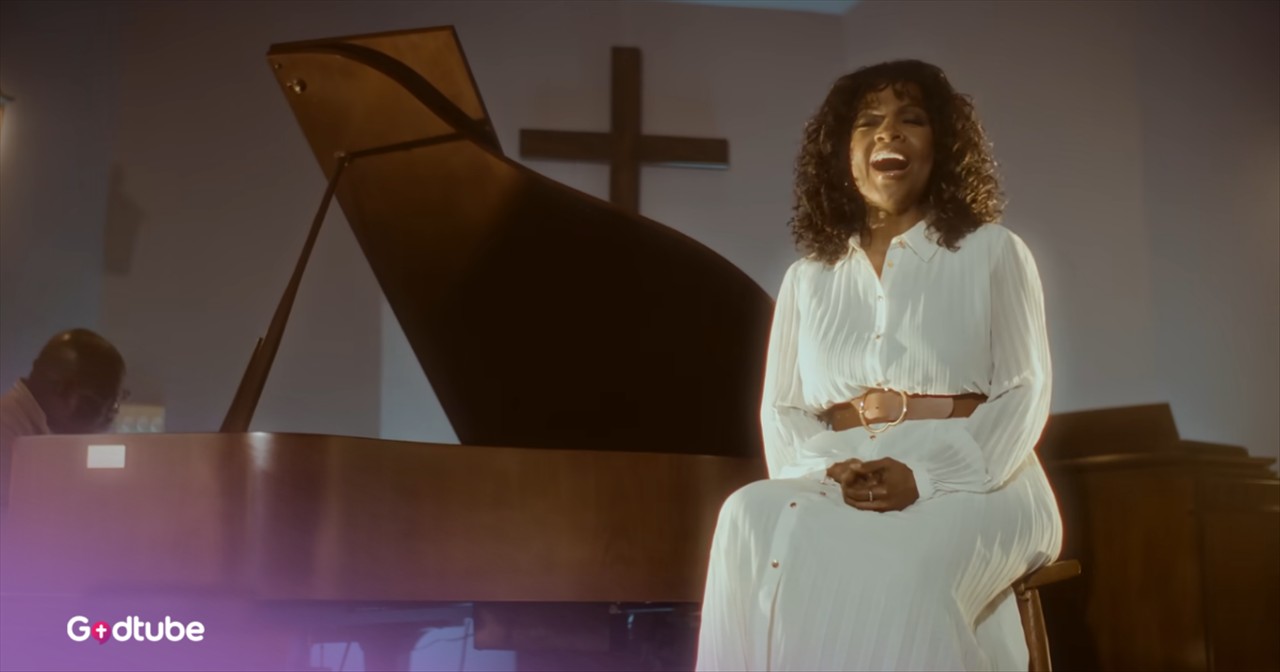
An impressive selection of time-honored favorites this is, but of course the power of the texts comes through most profoundly in CeCe’s renderings, all of which find her deeply invested in the messages, her voice rising and falling at precisely the key moments to underscore the most piercing emotions in each outpouring. Right out of the box, on “Blessed Assurance,” in a full piano-and-organ-led arrangement with a muscular gospel chorus behind her, CeCe’s deliberate attack is both majestic and an emotionally raw confession of the faith defining her life. Later, on “Jesus Loves Me,” a song many listeners of a certain generation will remember as a Sunday School perennial of their childhood worship services, CeCe, with the most minimal piano backing, tenderly caresses the lyrics—softly and tenderly, one might say—before a discrete backing chorus joins her to elevate the depth of conviction the lyrics celebrate—a template mirrored in the following entry, “What a Friend We Have in Jesus,” with the vocal warm and comforting in counseling “take it to the Lord in prayer” when hard times hit. Which in turn is followed by a new twist on the old warhorse, “How Great Thou Art,” in the synchronous mesh of deliberate, precisely enunciated verses lightly embellished by bright piano flourishes up to the big finish, which itself is restrained compared to the most popular versions by George Beverly Shea and Elvis Presley but nonetheless rises to a rousing emotional climax on the strength of CeCe’s bold, triumphant testifying. Bookending this clutch of tunes midway through the tunestack is the CeCe of legend pouring her soul into the Isaac Watts evergreen, “At the Cross,” her urgency near palpable in the determined vocal attack with a hand clapping, shouting congregation seconding her embrace of the Lord “at the cross, where I first saw the light/and the burdens of my heart rolled away/it was there by faith I received my sight/and now I am happy all the day.”

‘How Great Thou Art,’ CeCe Winans, from The Hymns
‘At the Cross,’ Cece Winans, from The Hymns
Elsewhere she offers a sotto voce, almost a cappella, humble testimonial of salvation, “I Surrender All”; another rousing affirmation in “Nothing But the Blood” with the jubilant support of her backing chorus; a moving, vulnerable treatment of “I Have Decided to Follow Jesus,” wherein her voice gains strength and determination when she confesses “though none go with me, I still will follow/though none go with me/I still will follow/though none go with me, I still will follow/no turning back, no turning back,” her resolve thrice articulated as the perfect setup to the final verse’s challenge: “Will you decide now to follow Jesus/will you decide now to follow Jesus,” again repeated thrice as the song closes on a whisper of a minor key piano chord. A case could be made that CeCe’s best performance is right here, both in terms of her masterful restraint carrying so much emotional heft and in setting the vocal against understated piano backing as CeCe shapes it to her will. And how perfect an ending to this tour de force of gospel testifying to lightly caress the beautiful lyrics of “The First Noel,” with angelic choristers quietly humming support and sometimes shadowing CeCe’s phrasing as the piano adds tender, music box-like flourishes. Suddenly this ancient Yuletide staple is freed from its seasonal strictures and becomes foundational to an album exploring and celebrating salvation, redemption, spiritual conviction, and spiritual rebirth. What began with “Blessed Assurance” (“Jesus is mine/oh what a foretaste of glory divine…”) concludes with the birth of this album’s reason for being; nay, for every believer’s reason for being. In her New York Times interview with Bob Marovich, CeCe herself articulated the ne plus ultra about The Hymns, in a revelation she had in response to a pastor’s letter praising her new album for the comfort it brought him in the wake of his son’s passing. Saying the pastor’s note made her weep, CeCe added: “This is what people need. Everything else is great, but there are times when the right song in the right tone hits you where the heart needs it most.”
Behold Cece Winans making disciples.