By David McGee
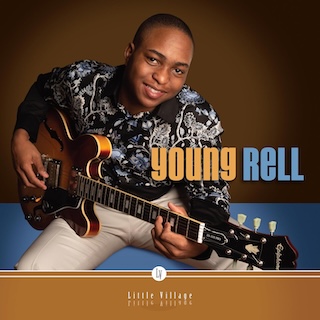 YOUNG RELL
Harrell ‘Young Rell’ Davenport
Little Village Records
“When you broke and you ain’t got no money, you ain’t got nothing but the blues. If you get hungry you got the blues. If your wife quit, you still got the blues. So there’s more than one way you can have the blues.” This real-world definition of the blues emerged from 44-year-old Mississippi bluesman James “Sun Ford” Thomas in a 1970 interview with folklorist William R. Ferris. Born in Yazoo County in 1949 and a lifelong resident of the Magnolia State, Sun Ford began performing in the 1940s but was virtually unknown to the world outside his home state until Ferris’s work in documenting contemporary Delta blues introduced the artist on record and to a national and international audiences in the early ‘60s.
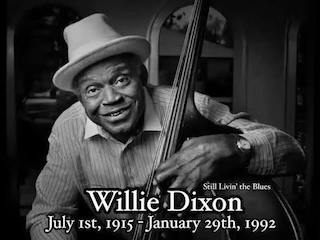
A year after Ferris’s Sun Ford interview, in 1971, Cary Baker, an ambitious 16-year-old Winnetka, Illinois, high school student, interviewed blues legend Willie Dixon on his school’s radio station in what turned out to be one of the most revealing of the prolific Dixon’s interviews ever. At one point, Willie offered one of his evolving views of the deeper meaning of the blues: “You see, the blues is actually the root of all American music, and a lot of folks don’t know this. The blues is the facts of life. And blues came from the various experiences that people have had in life, all their life, and people decide they’re going to sing about it. If a guy doesn’t have a lot of education to work with, he has to sing it according to the way he feels. And a lot of times, a guy feels different from you but you don’t know it no more than just looking at it, and because if he can’t explain it, he can’t tell you. But I’ve been lucky enough–I don’t know if you’d call it lucky or unlucky–to have had a bit of experience about all of it from my childhood days until the present day. And I know when a man is singing about something, what he’s singing about and the way he feels about it.”
In his later years Willie distilled this wisdom down to a simple, straightforward axiom, to wit: “The blues is about life. If it ain’t about life, it ain’t the blues.”
(Note: Cary Baker went on to have a distinguished career as a music writer specializing in blues and roots music and, for 42 years until closing up shop in 2022, as head of his Conqueroo publicity firm representing an always impressive roster of new and veteran blues and Americana artists.)

‘Spinning,’ Young Rell, from Young Rell
Certainly this wisdom is not unique to Sun Ford and Willie Dixon among veteran blues artists whose biographies and philosophies have been memorialized in books and magazines for decades. The former comes to mind owing to a fascinating feature on Sun Ford’s small-scale sculptures (molded from the same Mississippi clay in which he labored in his other job, as a gravedigger) headlined “Between the Devil and the Deep Mississippi” by Allison C. Meier in the Summer 2026 edition of Raw Vision, the authoritative publication chronicling Outsider Art and Art Brut. The latter’s axioms, oft referenced but undimmed by time, still have the effect of sounding like memos from Olympus.
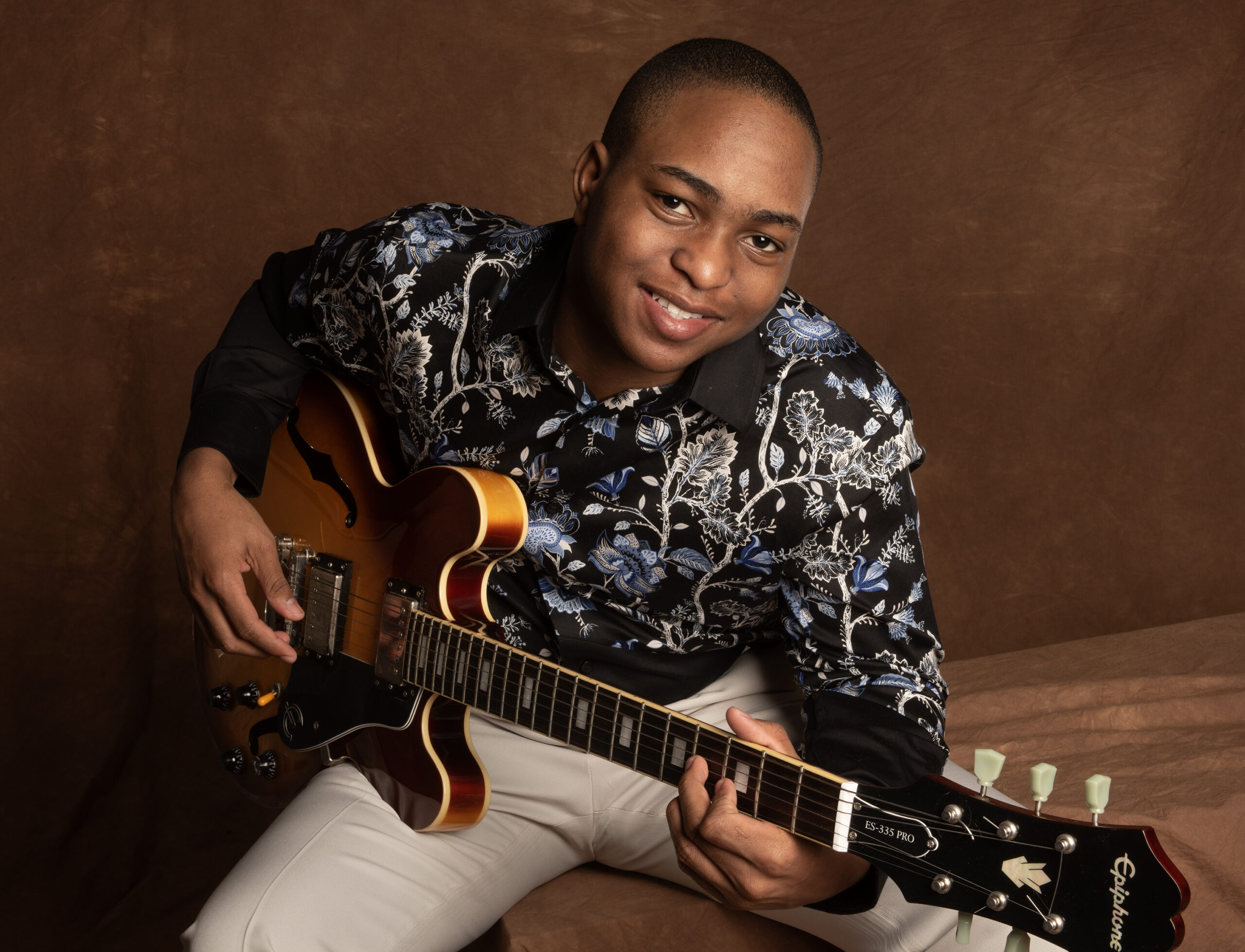
The wisdom of the blues, the meaning of the blues, lands more vividly these days owing to one of those rare moments when someone emerges with little or no fanfare seemingly destined to take a whole genre on his back and elevate it into the public consciousness to a degree foreign to the blues since, arguably, Stevie Ray Vaughan broke out with his debut album. This is not to diminish or understate the importance of other young artists whose artistry is reinvigorating the blues and gaining mainstream cred along the way-think Christone “Kingfish” Ingram, for one-but 19-year-old Harrell “Young Rell” Davenport, from the same Vicksburg, Mississippi, that gave us Willie Dixon back in 1919, has introduced himself in striking fashion with Young Rell on the Little Village label, produced by Young Rell’s manager, Mathew Skoller. Ten of its dozen tracks are Young Rell originals–by turns mature, witty, sensitive, hard-boiled, freewheeling, triumphant–along with a tough, grinding take on Fenton Robinson’s “I Hear Some Blues Downstairs,” wherein Young Rell credibly announces his intent to pass up pleasures of the flesh to join his music making friends elsewhere; and, startlingly, a funky, stomping, lacerating cover of Dylan’s “Masters of War” complete with the same degree of pitiless evisceration of hypocritical authority figures while striking with blunt force thanks to Young Rell’s heated vocal attack buttressed by his channeling of Little Walter-style fury in a blistering opening harmonica solo.

‘Masters of War,’ written by Bob Dylan, Young Rell, from Young Rell
As serious as all this sounds, let it be said he offers some lighthearted detours along the way, as in the humorous litany of vows articulated in “I’ll Keep It Hot for You”–“in these hard, hard times, when life gets you rough” (accenting “rough” like a dog barking)/”I’ll be your shelter, my love is strong enough/I’ll be around, your guiding star in this cold, cold world, no matter how far/you know it’s a cold, cold world, but I’ll keep it hot for you”--in which in a half-minute’s time he transitions from a playful, flirtatious paramour to a comforting and protective partner rescuing someone in need, like that, as easily as breathing air that ain’t been breathed before. By the same token, the album kicks off with a familiar, lively Chicago-style jump blues outburst on “Tomorrow,” it being a jaunty gallop in which Young Rell sort of puts off a sultry paramour with a hearty “come back tomorrow when I’m grown” in which the hint of a chuckle sneaks into his delivery.
But when he gets serious, he really gets serious, with the most piercing of these entries being “Fatherless Child,” his unabridged, close to the bone, autobiographical foray into a deep urban blues milieu, his mournful harmonica setting the stage for a hard hitting outpouring of all the emotions roiling the youth in question. “Well, when I was a little boy,” he begins, his sturdy vocal welling with emotion, “my father was nowhere around/so I had to grow up quick because I’m an only child/I wish things could have been better but it’s really not my fault”–pause–“you know I wish things could have been better but it’s really not my fault/well, I’m all alone right now, oh, I’m a fatherless child.” He goes on to address his mother’s commitment to doing “all she can” but “I can’t stand to see her cry when we go home without food/we-e-e-ll she’s a real tough lady trying her best to provide/well I’m all alone right now, oh, I’m a fatherless child.”
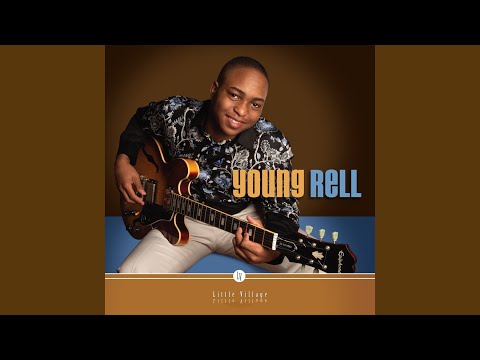
‘Fatherless Child,’ Young Rell, from Young Rell
This might be the place to mention the great support Young Rell receives from the a band of Bay Area musicians presumably assembled by Skoller, including Jim Pugh (outstanding on organ and piano, especially the latter on “Fatherless Child”); Endre Tarczu (bass on four tracks); “Kid” Anderson (guitar on four tracks; rhythm guitar on two tracks); Daquante “Q”Johsnon (bass on eight tracks); June Core (drums); Larry Batiste (background vocals, one track; horn arrangements, two tracks); Aaron Livington (tenor and baritone sax, two tracks); and Niel Levonius (trumpet, two tracks).
About “Fatherless Child,” the song cutting–deeply cutting–closest to the heart of his own experience, Young Rell explained to the Music Network’s Michael Limnios, “This song is one that comes from a deep and personal place. It speaks to carrying on, finding strength, learning to navigate the world without a father and holding on to the roots that shape who we are.” And in a rare moment of understatement he adds: “I hope when you hear it, you can feel that same sense of spirit and purpose that guided my team and I in making it.”

‘Richland Swing,’ Young Rell (guitar), Aaron Lington (baritone sax), Jim Pugh (organ), from Young Rell
He visits “Fatherless Child” territory again on a deceptively casual, country blues steamer, “Hurt People, Hurt People,” wherein Young Rell delivers unburdens himself of hard truths he’s learned way too early in life but delivers with the unswerving authority of one who’s already been there, done that, over a grinding backdrop fashioned by his crying, shimmering harp, Cruz’s steady, foreboding drums, and Pugh’s teardrops on the 88s: “If there’s one thing that I’ve learned/if you play with fire, you gonna get burned/just remember that hurt people, weeelll, they hurt people/you know what I’m talkin’ about…” Add some horns to this and you might hear Young Rell inveighing against callousness as brazen as it is wounding as surely as Percy Mayfield did in his stylish attack on racism in “Please Send Me Someone to Love.”
Back to the interview with Michael Limnios, Young Rell offered this informed perspective on the forces shaping his development as a blues artist. To wit: One of the hardest things I’ve had to face is learning how to live with PTSD, anxiety, and depression. These aren’t just passing feelings, they’re heavy, daily realities that affect how I see the world, how I move through it, and how I relate to others. As a person, I’ve had to fight just to keep going some days. As an artist, I’ve had to find ways to express that pain without letting it consume me. The blues has been a lifeline in that way. It gives me a language for things I can’t always explain, and it reminds me I’m not alone. Every time I pick up a guitar or open my mouth to sing, I’m working through it. That struggle, as hard as it is, has made my music deeper, more honest, and I think people feel that.

‘Hurt People, Hurt People,’ Young Rell, from Young Rell
On the other hand, our man is not without a lighthearted side. The Stax-style R&B thrust of “Spinning” is a witty account of being blindsided by love worthy of an Isaac Hayes-Dave Porter classic, complete with a robust horn section pumping energy into the soundscape, some rich bass fills courtesy Endre Tarczu, and a self-effacing vocal fueling the upbeat workout. “Richland Swing” is a furious R&B band romp worthy all at once of Louis Jordan and His Tympany Five (Aaron Lington supplying the muscular baritone sax solo), Jimmy Smith (Jim Pugh gets into a sparkling Smith groove on an extended organ solo here), and Matt Murphy (Young Rell doing his finest Murphy homage with an explosive guitar solo to launch the whole exercise into the stratosphere, much as Murphy did in a set with Willie Dixon, Bill Stepney, and Memphis Slim during the 1963 American Blues Festival European tour of 1963).
So pay attention to this debut. Artists on Young Rell’s level don’t come around all that often, and this is only the beginning. Seeming to have his wits about him, a solid core of values, and already having come a long way in his development at such a tender age, consider the artist as assessed in the album liner notes by blues veteran Billy Branch: “To describe him as an ‘old soul’ is almost an understatement. He possesses a natural wit, self assurance and a stage presence usually reserved for veteran artists, many years his senior.”

‘I Hear Some Blues Downstairs,’ written by Fenton Robinson, Young Rell, from Young Rell
As for his own artistic North Star, Young Rell had this to say when Michael Limnios asked him about the impact of the blues on the socio-cultural implications of his art, how he wants his music to affect people. And lo, we have one more definition to add to Sun Ford’s and Willie Dixon’s time-honored perspectives on this music: “The blues is more than music, it’s a document of survival, resistance, and resilience. It tells the story of people who were never supposed to make it, yet did, with soul intact. It carries history in every bend of the note. I want the music to remind people of their strength, their humanity, and their right to feel deeply. Whether it makes them cry, dance, reflect, or heal, I want it to move them and make them feel seen, but I also want them to remember where it comes from, and the history of it all, because in my opinion, if you don’t know the history you don’t know the blues.”
This is a moment. Savor it.