 Summa – Arvo Pärt
Cello Octet Amsterdam
7K Records
Review by Robert Hugill
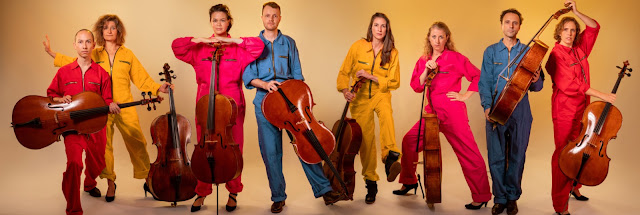
The Cello Octet Amsterdam began life in 1989 when there were only two pieces for eight cellos. By 2009 they are eight cellists based in Amsterdam looking to create new music for the ensemble. They have now been performing with the same eight cellists for five years, responsible for more than 90 world premieres. Composers they have worked with include Philip Glass, Sofia Gubaidulina, Theo Loevendie, Nyokabi Kariüki, Sarah Davachi, Michael Gordon, and Kate Moore. After the premiere of his first piece for the Octet, Arvo Pärt said: “The Octet is worth its weight in gold. I discovered this ensemble 10 years too late.”
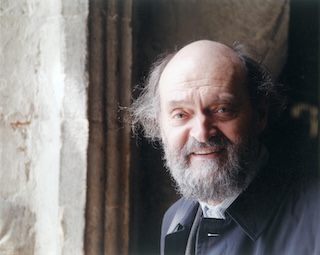
To celebrate Arvo Pärt’s 90th birthday the Octet (Rares Mihailescu, Claire Bleumer, Geneviève Verhage, Esther Torrenga, René van Munster, Sanne van der Horst, Sanne Bijker, Alistair Sung) have released Summa, a disc of Pärt’s music on 7K records. The album is the first-ever recording of selected works by Pärt reimagined for eight cellos, specially rearranged by the composer himself over the course of 10 years in close collaboration with the Octet.
Pärt–who rarely creates re-arrangements–specially re-arranged his music for the unique set-up of eight cellos. In some ways, he transformed and reshaped past pieces of choral and organ into new works. From 2008 to 2018, Pärt and the Octet collaborated intensely, with the composer experimenting in rehearsals with different textures and keys to work out the most resonant and fitting translation for the cello ensemble, transforming his works into a unified sonic body of strings.
Silouan’s Song, composer Arvo Pärt, by Cello Octet Amsterdam, from the album Summa

Summa, composer Arvo Pärt, by Cello Octet Amsterdam, from the album Summa
The album features Solfeggio, Silouan’s Song, Psalom, Missa Brevis, Summa, O-Antiphonen, and Pari Intervallo. Pieces that are largely familiar but which here seem newborn. It is remarkable how the new instrumentation and aesthetic changes things. Differences in timbre become less important and the Octet produce a remarkable unified, hypnotic sound. Solfeggio introduces the sound world, something slow, intense and sustained, with the players drawing us in. Even in something more mobile like Silouan’s Song there is a mesmeric quality and the silences have a different quality to them, more thoughtful, with the climactic moments feeling very intense. And the hocketing of Da Pacem Domine becomes something magical.
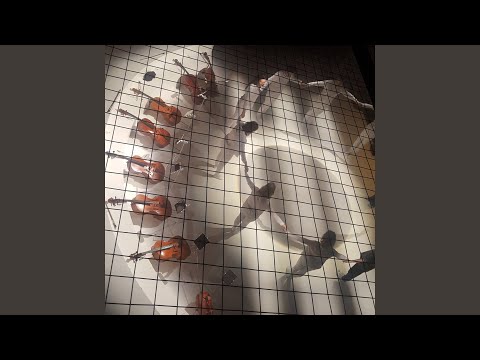
O-Antiphonen – O Adonai, composer Arvo Pärt, by Cello Octet Amsterdam, from the album Summa

Missa Brevis – Agnus Dei, composer Arvo Pärt, by Cello Octet Amsterdam, from the album Summa
Pärt’s Missa Brevis was written in 2009 for the 12 violoncellists of the Berlin Philharmonic to celebrate the 20th anniversary of the fall of the Berlin Wall. Missa brevis is closely related to Berliner Messe from 1990, composed for the 90th German Catholics Day, the first one held after the fall of the Berlin Wall. Here, we hear the work for eight cellos. Berliner Messe originally had an organ part, without it Pärt makes something aetherially magical of the new work.

Psalom, composer Arvo Pärt, by Cello Octet Amsterdam, from the album Summa
Pärt’s O Antiphonen are the works on this disc that I know best in their original form having sung them a few times. In their new guise they are the same but not the same. The use of eight cellos, the unified sound world, the harmonic high notes, the lack of edge to the sound, all contribute to the haunting effect of the pieces. The way Pärt’s tintinnabuli works with the cellos seems to have an entirely different effect to that with voices particularly in the more dramatic O Antiphonen with their blocks of choral color juxtaposed. Here, even the most dramatic movements have a poised intensity.
This is Pärt’s “holy minimalism” taken to its ultimate and the sophisticated performances that the works receive from Cello Octet Amsterdam never once make you miss the originals. These are transcriptions which simply transcend the originals, in superb performances that are completely transformative.
 Reviews published here by permission of Robert Hugill—a singer, composer, journalist, lover of opera and all things Handel–at Planet Hugill (www.planethugill.com). To contact Robert and/or to receive his lively “This Month on Planet Hugill” e-newsletter, sign up on his Link Tree. Robert Hugill photo by Robert Piwko. Mr.Hugill’s review of Divine Impresario: Nicolini on Stage was published at Planet Hugill on 11 June 2026. Mr. Hugill’s personal webpage including his composition catalogue is here.