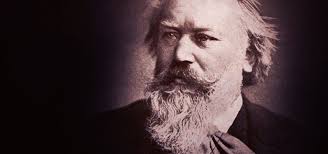
Nicolini Grimaldi (April 5, 1673 – January 1, 1732) was a celebrated Italian castrato singer and actor, famous for establishing Italian opera in London. Creating roles for Handel and being lauded as a gifted performer whose blend of vocal virtuosity with exceptional dramatic skill, Nicolini set high standards for Baroque opera.
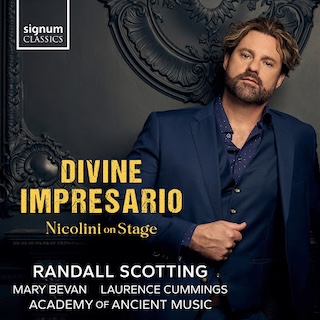
DIVINE IMPRESARIO: NICOLINI ON STAGE
Randall Scotting, Mary Bevan, Academy of Ancient Music, Laurence Cummings
Signum Classics
Review by Robert Hugill
The first major castrato to sing in London who wowed audiences with his performances, Nicolini is an intriguing figure and on this disc Randall Scotting weaves a fascinating selection of arias written for Nicolini into an engaging recital
If you refer to an 18th century castrato, then the likelihood is the first name to come time mind will be Farinelli, who caused a sensation during his lifetime and whose reputation endures. But there were others, and the first to cause a stir in London, singing in the first complete Italian opera there, was Nicolò Grimaldi known as Nicolini. In London, Nicolini is associated with his roles for Handel: the title roles in Rinaldo (in 1711) and Amadigi di Gaula (in 1715). But he was more than simply a singer, being involved in the operas themselves.
It is these aspects of Nicolini’s career that countertenor Randall Scotting‘s new disc on Signum Classics, Divine Impresario: Nicolini on Stage seeks to illuminate. Joined by soprano Mary Bevan, the Academy of Ancient Music and Laurence Cummings, Scotting performs music from Broschi’s Idaspe (Venice, 1730), Gasparini’s Ambleto (London, 1712), Handel’s Rinaldo (London, 1711), Porpora’s Siface (Venice, 1726), Handel’s Amadigi (London, 1715), Gasparini’s Antioco (London, 1711), Mancini’s Idaspe Fedele (London 1710), Ariosto’s Tito Manlio (London, 1717), Gasparini’s Tomiri (London, 1709), and Giaj’s Mitridate (Venice, 1729).
Antioco: Questo conforto, Randall Scotting, Academy of Ancient Music, Laurence Cummings. Composer: Gasparini. From Divine Impresario: Nicolini on Stage.
Ambleto: Porto Piagato in Petto, Randall Scotting, Academy of Ancient Music, Laurence Cummings. Composer: Francesco Gasparini. From Divine Impresario: Nicolini on Stage.
Nicolini made his debut in London with Scarlatti’s Pirro e Demetrio, which had nearly 60 performances between 1708 and 1717. Another early success was Mancini’s Idaspe fedele, where Nicolini wowed audiences with a scene where, wearing a flesh-colored bodysuit, he wrestled with a lion. A scene so popular it had to be encored. Nicolini had brought the score of Idaspe with him to London, but it was adapted for London according to his wishes with the music arranged by Johann Christoph Pepusch (of Threepenny Opera fame).
Nicolini had created the role of Idaspe in Mancini’s Idaspe fedele in 1705, so when he came to London the opera was clearly a favorite he wanted to revive. And still, in 1730 in Venice he would return to the role of Idaspe for the fourth time, this time in Ricardo Broschi’s Idaspe (originally written for Broschi’s brother, Farinelli).
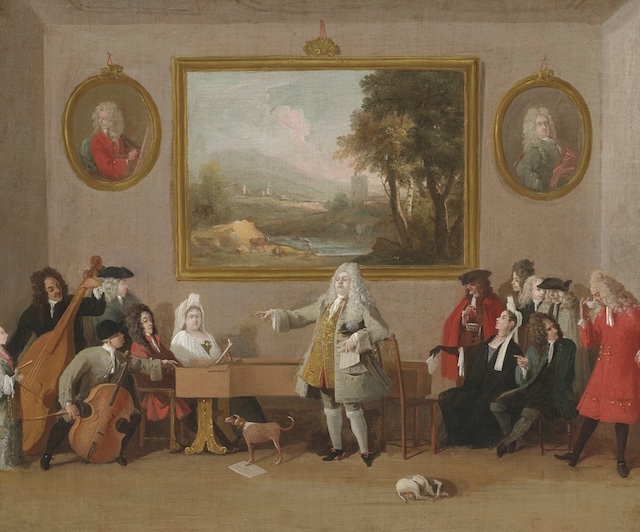
Painting of a rehearsal for Scarlatti’s Pirro e Demetrio by the Venetian master Marco Ricci from around 1709; Nicolini stands poised at the center of the scene.
Opera historian Angus Heriot claims that with his arrival in London, Nicolini was “perhaps more than any other single person responsible for the popularity of Italian opera in England.” Nicolini was based in London from 1708 to 1712, then for the next four years he iterated between Italy and London, returning for Handel’s Amadigi and Ariosti’s Tito manlio. By the 1720s he is a somewhat mature, elder statesman performing in Europe but seems to have had something of a golden season in Venice in 1729 and 1730. The disc reflects these two, the London operas and the late Venetian ones.
We begin with the vocal virtuosity of Broschi’s 1730 Idaspe when we can imagine our portly hero in a flesh bodysuit–just about! Next comes Hamlet, in the form of Gasparini’s Ambleto, not based on Shakespeare. This was another role that Nicolini had already premiered, in Venice in 1706 so we can imagine that here too, Nicolini arrived in London with the score and Pepusch made adjustments for him. We hear a thoughtful, yet not undramatic aria where Ambleto considers dissonance between his inner truth and the façade demanded by his circumstance. A sinfonia introduces Handel’s Rinaldo where we hear the hit number “Cara sposa” with which Nicolini held audiences so spellbound.
With Porpora’s Siface we move to Venice in 1726, with a duet from late in the opera where Mary Bevan’s dignified Virate is confronted with Scotting’s more intensely dramatic Siface. Porpora was Farinelli’s teacher and his operas were always designed to show singers off to their best.
Handel’s Rinaldo was such a terrific success, with at least 37 performances in London from 1711 to 1717. It was followed up with Amadigi, another magic opera, also with Nicolini who was singing his last opera for Handel. We hear the enchanting night scene, Oh notte!… Notte amica.
Siface: Come nave in mezzo all’onda, Randall Scotting, Academy of Ancient Music, Laurence Cummings. Composer: Nicola Porpora. From Divine Impresario: Nicolini on Stage.
We then return to Porpora’s Siface for a typical showy simile aria about a ship in stormy weather. A hackneyed device in opera seria but one which Porpora handles with elan and intelligence including some fine horn writing. Gasparini’s Antioco is another opera set in classical times. It was premiered in Venice in 1703 (as Il più fedel fra i vassalli) and was presumably renamed in London to flatter Nicolini in the title role! We hear a rather elegant duet, with Bevan and Scotting as star-crossed lovers bidding each other farewell.
The scene we hear from Mancini’s 1710 Idaspe fedele is not the dramatic lion one but something gentler as he remembers his beloved in a touching aria with solo violin. It is perhaps important to remember that when Nicolini sang “Venti turbini” from Handel’s Rinaldo in 1711, London audiences had probably heard little virtuosity like it. The singer was at his prime and was renowned both for his musicality and his acting. Here, Scotting does a fine job in carrying us away with his own vivid performance.
Rinadlo, HWV 7a (1711 version): Vento turbini, Randall Scotting, Academy of Ancient Music, Laurence Cummings. Composer: George Frideric Handel. From Divine Impresario: Nicolini on Stage.
Like Handel, Ariosto was one of the composers that the Royal Academy of Music brought to London for its opera season. So whereas Gasparini’s scores probably came via Nicolini’s suitcase, Ariosto wrote Tito Manlio for the singer. The librettist was the London-based Italian Nicola Haym, who also worked with Handel. We hear a quite intimate aria which makes a graceful contrast to the preceding Handelian bravura on the disc. Gasparini’s Tomiri was a pasticcio created with a libretto by Peter Anthony Motteux, a French-born English author, playwright, and translator who was a significant figure in the evolution of English journalism in his era. The aria features a fast moving bass line that gives the piece added excitement provides support for Scotting’s virtuosity. We return to Gasparini’s Antioco for an aria from Act Three which sees our hero despairing in prison. The music has something of an elegant sway to it with Scotting bringing a pleasing pathetic element.
For the penultimate aria on the disc we return to Venice in 1729 with Mitridate by Giovanni Antonio Giaj (or Giay), who was in charge of the Cappella Regia in Turin. Here we have an engagingly vivid sense of drama and some bravura elements. We end with a return to London for the Act Two duet between Amadigi and Melissa, which Scotting and Bevan throw off with the requisite bravura and engaging charm, supported by some lovely perky orchestral playing.
Tito manila: No, non piangete no, Randall Scotting, Academy of Ancient Music, Laurence Cummings. Composer: Attilio Ariosti. From Divine Impresario: Nicolini on Stage.
When I interviewed Randall Scotting in 2022 we focused on his disc of arias written for Senesino and Scotting [see my interview] he talked about how he enjoyed the more academic aspects of music of this period, researching in libraries and creating his own editions. It is clear that something of this has fed into this fascinating yet enjoyable disc, which not only provides a deep dive into the career of one of the early architects of Italian opera in London but creates a most satisfying and varied recital. And impressively, nine of the tracks are first recordings.
The disc is threaded through with highlights from Handel’s two operas for Nicolini, but the remaining selections are equally engaging. The standard of performance is, as we would expect, very high but there is also the feeling that all the performers are enjoying themselves, being engaged with the subject and the music.

Reviews published here by permission of Robert Hugill—a singer, composer, journalist, lover of opera and all things Handel–at Planet Hugill (www.planethugill.com). To contact Robert and/or to receive his lively “This Month on Planet Hugill” e-newsletter, sign up on his Link Tree. Robert Hugill photo by Robert Piwko. Mr.Hugill’s review of Divine Impresario: Nicolini on Stage was published at Planet Hugill on 12 March 2026. Mr. Hugill’s personal webpage including his composition catalogue is here.