

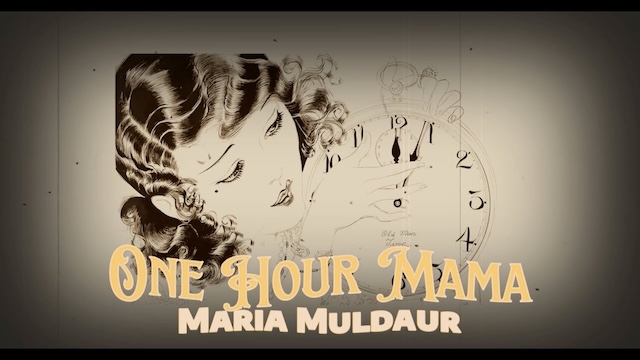
Maria Muldaur’s tribute to her mentor Victoria Spivey leads the 2025 Elite Half-Hundred honorees
The Best of the Rest
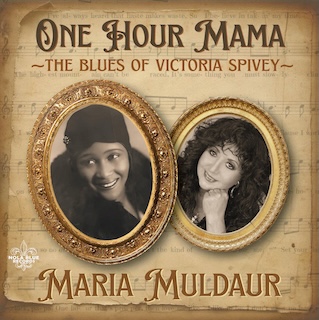 1. ONE HOUR MAMA: THE BLUES OF VICTORIA SPIVEY, Maria Muldaur (Nola Blue)– Maria Muldaur holds an almost singular place in contemporary blues in devoting so much of her career to honoring the great female blues singers who preceded and influenced her. In 2001 she stirred the pot with Richland Woman Blues, a tribute to Memphis Minnie, Bessie Smith, and Mamie Smith; in 2005 she offered an entire album tribute to Memphis Minnie on Sweet Lovin’ Ol’ Soul; in 2012 she paid Minnie another tribute on …First Came Memphis Minnie; and in 2007 she surveyed the ribald side of blues from the ‘20s to the ‘40s in Naughty, Bawdy and Blue in songs associated with Alberta Hunter, Mamie Smith, Ma Rainey, Sippie Wallace, and Ms. Spivey. Maria, along with Rory Block (with her Mentor Series tributes to the great male blues masters she knew and learned from), are pretty much on this trail alone.
In short, the lives and music of pioneering distaff blues singers has been a vital component of Ms. Muldaur’s vital part of her identity from the time she first set foot on a stage or in a recording studio. Let the rest of the world genuflect at the altars of Disney-trained pop tarts; Maria Muldaur sings of mature women and their inner lives and lusts. In some of these endeavors she’s been backed by James Dapogney’s Chicago Jazz Band, as she is on three tunes on this new tribute to a woman without whom there might not be the Maria Muldaur we’ve known since the ‘60s, namely one Victoria Spivey. Growing up in Greenwich Village, the young Maria Grazia Rosa Domenica D’Amato was drawn to her fellow Village resident and performer, Ms. Spivey, at the outset of her professional career. The liner notes for One Hot Mama: The Blues of Victoria Spivey recount the deep influence Ms. Spivey exerted on Maria’s entire approach to the professional musician’s life. And why not? Victoria Spivey was no mere blues singer, as Dr. Warren Davies documents in liner notes he penned for the Journal of Jazz Studies and reprinted in One Hour Mama, to wit:
She was, at one point or another: a bar room pianist, a top selling “race” recording artist, a staff composer for a music publishing company, one-half of a vaudeville double-act, a Hollywood actress, a church music director, a record producer and label owner [Ed. Note: she was the first to record Bob Dylan], a booking agent, and a jazz critic.
Follow this link to the full review, ‘Channeling Victoria, Remembering Johnnie,’ in Deep Roots.

‘My Handy Man, written by Andy Razaf; Maria Muldaur, from One Hour Mama: The Blues of Victoria Spivey
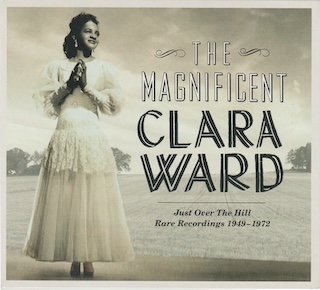
2. THE MAGNIFICENT CLARA WARD: JUST OVER THE HILL 1949-1972, Clara Ward (Gospel Friend)– If we break down Clara Ward’s monumental, influential career strictly to the music, then this welcome trove of rare and previously unissued (some thought lost) recordings spanning Ward’s entire studio output offers an invaluable overview chronicling the magnitude of Clara’s artistry and of her accompanying Ward Singers’ deeply commanding support (one of those singers, Marion Williams, became a gospel giant in her own right after leaving Clara’s employment and establishing one of gospel music’s most important careers during which she was favorably compared to Mahalia Jackson)—a blend so fervent and fiery as to leave a listener both shaken and uplifted, as the greatest gospel music will do.
This is the latest release from Swedish producer Per “Stockholm Slim” Notini’s Gospel Friend label. Heretofore Notini has issued important compilations of Bobby Robinson’s Revelation Records label (in 2005’s Best of Revelation Records, 1959-1962); of Edna Gallmon Cooke (2017’s My Joy: Rare Recordings, 1946-1966); of the Pilgrim Travelers (2015’s Gospel Boogie: Rare Recordings, 1946-1957); and 2018’s Soul Don’t Worry! Black Gospel During the Civil Rights Era, 1953-1967 (the latter on the NarroWay label). A musician as well as a producer and gospel collector, Notini leads his own choir and gospel group, Slim’s Gospel Train, and also steps outside the gospel lines just a bit with his blues group, Slim’s Blues Gang. In his liner notes for the Ward compilation, Notini says the song program here “has been set up to avoid duplication on any other CD released on the Wards during the last 23 years.” He’s also made extensive use of various credible sources of biographical background in his summary of her and her Singers’ productive career, including what he describes as Clara’s “manifesto,” in her own words. Follow this link to the full review, “Clara Ward Abides,” in Deep Roots.

‘From Youth to Old Age,’ Clara Ward’s autobiographical original, from her final sessions. Recorded for Nashboro Records, 1971, and featured on The Magnificent Clara Ward
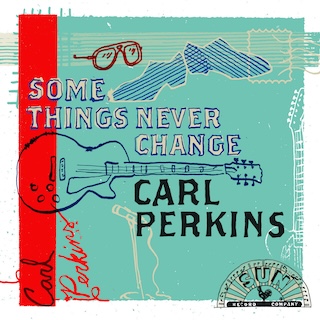
Carl Perkins Some Things
3. SOME THINGS NEVER CHANGE, Carl Perkins (Sun Records)—It’s the missing link in the Original Cat’s recording history, an album recorded and discarded in 1990, recovered in 2025 from history’s dustbin—or rather producer Bill Lloyd’s personal archives—and released on the revitalized Sun Records label now under the aegis of New York-based music and media company Primary Wave. Some Things Never Change might well have altered Carl Perkins’s disappointing late career trajectory, as sure as American Recordings did for Johnny Cash. Given Carl’s hard-luck odyssey, that’s a very big might. But these sessions did showcase his best writing and most soulful performances since the aforementioned My Kind of Country, about which something Carl said in an interview for his biography also applies to Some Things Never Change, to wit: “Most of the things I wrote touched on my own soul. I’m roamin’ around in those songs.” Given all the missteps and misfortunes in Carl’s career, the title Some Things Never Change is rich in irony. But the power—and the truth—of its performances at least takes some sting out of being kicked in the teeth by fate. The full story of the recording, its sad fate in 1990, and its recovery in 2025 by Perkins’s biographer, David McGee, is in Deep Roots.

‘Some Things Never Change,’ Carl Perkins, title track from his rediscovered, previously unreleased 1990 album produced by Bill Lloyd
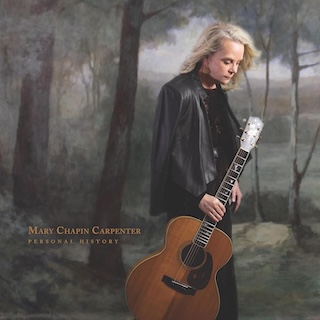
4. PERSONAL HISTORY, Mary Chapin Carpenter (Lambent Light)– If Mary Chapin Carpenter wanted to make a biographical concept album, she doubtless would have plenty to draw from, but Personal History finds her approaching the project in her own way. Rather than tying the material to a narrative through line, she has instead offered us 11 songs that play like journal entries or a series of short stories, with each track providing a different insight into who she is and how she became the woman she is in 2025.
Carpenter shares her thoughts on growing older and coming to terms with the past (“Coda”), the mysteries of the passage of time (“What Did You Miss”), the people who informed her creative process (“Paint + Turpentine”), pondering things that could have been (“The Night We Never Met”), the complicated notions of fate and faith (“New Religion”), and the pleasures of solitude (“Girl and Her Dog”). If these songs aren’t explicitly autobiographical, they certainly sound like they could be, and they feel deeply personal, both in their lyrics and in Carpenter’s vocals, as intimate and honest as a conversation at 3 a.m. Personal History was recorded at Peter Gabriel’s Real World Studio, which has become one of her favored work environments, with Josh Kaufman of Bonny Light Horseman handling production, and while they’re capable of crafting full bodied arrangements on songs like “The Saving Things” and “Bitter Ender,” most of this album matches the tone of the songs, intelligently spare and adding just enough detail to reinforce the emotions of her performances. Full review by Mark Denning at Allmmusic.com

‘What Did You Miss,’ Mary Chapin Carpenter, from Personal History
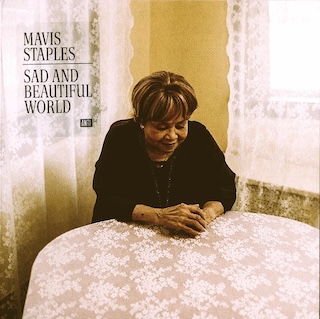
5. SAD AND BEAUTIFUL WORLD, Mavis Staples (ANTI-Records)— The moment Mavis Staples opens her mouth to sing, peace comes over the world. Since emerging in 1969 from the Staple Singers – one of the most important groups in the Civil Rights movement – to record her first album, she’s consistently owned a voice capable of soothing even the most troubled soul. And at age 86, she remains at the top of her game when we need her most. …
Produced by multi-instrumentalist Brad Cook (Bruce Hornsby, Nathaniel Rateliff and the Cold Sweats) with vocals captured at Lost Boy Sound and Chicago Recording Company, Mavis gets a helping hand from Buddy Guy, Bonnie Raitt, Rick Holmstrom, Derek Trucks, Wilco frontman Jeff Tweedy, Eric Burton and other top talents as she fondly reinvents tunes spanning 70 years and culled from the American songbook. …
Curtis Mayfield’s “We Got to Have Peace” will definitely lift your mood as it claims that the world has no choice if we’re going to survive. Leonard Cohen’s “Anthem” cautions the listener to stop running from killers in high places and lawless crowds. Mavis’ message tells us to rest assured that there’s a crack in everything dark that lets light through. And that hopeful thought comes through loud and clear with Red Hayes and Jack Rhodes’ country classic “Satisfied Mind” – which notes that only one in ten rich men are at peace. Eddie Hinton’s simple but beautiful “Everybody Needs Love” is a fitting closer that will have you singing along. Full review by Marty Gunther at Chicago Blues Guide.

‘Human Mind,’ Mavis Staples, from Sad And Beautiful World
 6. STRANGE THINGS HAPPENING, Kid Ramos (Nola Blue)— It’s not even the midpoint of 2025 and gospel music has already produced three of the best albums of the year. In January came By the Riverside, the latest from one of the genre’s legendary vocalists, Lynda Randle; in February, following the lightning strike that was her debut EP in 2024, Netherlands-based American expat Regina Vanderejk announced the arrival of a singer-songwriter of exceptional gifts in The Lord is There; and in March came another surprise when veteran bluesman Kid Ramos, much awarded (he Orange County Music Awards Lifetime Achievement Award in 2014 and a total of 14 Blues Music Award nominations to date) and much traveled (a number of bands including the Fabulous Thunderbirds, the James Harman Band, Los Fabulocos, et al.), turned to gospel in its vintage form for his first new album in five years, Strange Things Happening, on the Nola Blue label.
On first blush you might say Kid’s entry is the most surprising, since his 40-plus years in the business have found him producing unapologetic tough blues and blues-rock in his various incarnations. On the other hand, blues and gospel have often been no more than a silly millimeter apart, and both are key components of rock ‘n’ roll’s foundation—King of Rockabilly Carl Perkins made no secret of the influence of gospel, in particular that of Sister Rosetta Tharpe, on his own writing and guitar mastery; Chuck Berry has been quoted as saying his entire career amounted to one long Sister Rosetta Tharp impersonation. On national TV, during his 1968 comeback special, Elvis, who had always acknowledged the influence of black music and black artists on his own music and on rock ‘n’ roll in general, reminded his live audience that “rock ‘n’ roll music is basically rhythm and blues and gospel.” Which is a long way of saying Kid Ramos comes by his gospel affection honestly, and honesty suffuses the intensity of the performances on Strange Things Happening.
Follow this link to the full review, “Lord, Have Mercy!”, in Deep Roots

‘How I Got Over,’ Kid Ramos with Brian Templeton on lead vocal, from Strange Things Happening
 7. 1682, Shawn Lane & Richard Bennett (Pinecastle Records)— You could hardly imagine a better roots music collaboration than that of Blue Highway’s vocalist-guitarist Shawn Lawn and the masterful bluegrass guitarist Richard Bennett, whose extensive bluegrass credits include a long tenure with JD Crowe & the New South. Having been writing together for a few years, the duo finally saw fit to put five originals and one cover together for 1682. Backed only by Grayson Lane on mandolin and harmony vocals and bassist Jacob McFadyen, Lane and Bennett deliver a plaintive, folkish set in which travel figures prominently—as in the loping title track, in which a ghostly spirit recounts his troubled journeys through a changing land since his passing in 1682. Lane’s sardonic warning of “you never really see me/just the things I do” is given a sinister shadow courtesy Bennett’s restless, searching soloing behind Lane. Similarly, Bennett, in tender, upbeat form, lends sunlight to Lane’s troubled remembrance of things past, “1000 Miles.” The lone cover, a warm folk ballad take on Phil Collins’s “Take Me Home,” fits in thematically as a measured, homesick homily from an “ordinary man.” That the spirit of Norman Blake is strong in these artists is both an understatement and a compliment of the highest order. —David McGee

‘1682,’ Shawn Lane and Richard Bennett, title track from their latest album
 8. DOWN BY THE RIVERSIDE, Lynda Randle (Gaither Music Group)—A 10-song house wrecker that comes straight out of the country church, Down By the Riverside finds Lynda Randle backed by a Mildred Falls-like piano, organ, banjo, mandolin, and an occasional steel guitar in decidedly roots country soundscapes. Five of the 10 tracks are reprised from her 2023 EP, By the Riverside, all bringing captivating messages of salvation, such as the well-worn title track, a celebratory African-American spiritual predating the Civil War; an infectious, driving shuffle take on the A.J. Showalter-Elisha Hoffman standard dating from 1887, “Leaning on the Everlasting Arms,” with Randle, swinging free and easy, confidently confessing her life affirming confidence in divine guidance; and a downright funky workout on the 1970 Anne Murray hit, “Put Your Hand in the Hand” (penned by her fellow Canadian Gene Maclellan, who also wrote the tender pop classic, “Snowbird,” Ms. Murray’s career launching smash), complete with a lively organ percolating throughout, frisky percussion and call-and-response passages that add emphatic gravitas to lyrics such as “when I’m down on my knees that’s when I’m closest to Heaven…” Follow this link to the full review, “Report from the Mountaintop,” in Deep Roots.

‘Leaning on the Everlasting Arms,’ Lynda Randle, from Down by the Riverside
 9. GANDHI—MANTRAS OF COMPASSION, Ricky Kej, Tina Guo, Masa Takumi and featuring Kailash Satyarthi, New York Youth Symphony, Tonality (Independent)– A collective of Grammy-winning artists from around the world has released a global musical tribute to Mahatma Gandhi celebrating the Indian leader’s legacy of peace and nonviolence. The Gandhi: Mantras of Compassion project featuring original compositions, traditional hymns, and spoken word passages was spearheaded by three-time Grammy winner Ricky Kej and Nobel Peace Prize Laureate Kailash Satyarthi, who developed the concept during a four-city India tour last year. They were joined by Grammy-nominated cellist Tina Guo, Grammy winning shamisen player Masa Takumi, and more than 230 musicians from 40 countries. The year-long production spanned 31 studios worldwide. The album blends new-age and world music with Gandhi’s favorite hymns and mantras, reinterpreted to reflect themes of unity, compassion, and coexistence. Highlights include a Sanskrit version of the Lord’s Prayer sung by 100 priests and nuns, later blended with a Los Angeles orchestra and blessed by Pope Francis, and “We Are One,” uniting 40 singers from 40 countries. Follow this link to the full review, ‘A Humble Offering to Keep the Flame Alive,’ in Deep Roots.

‘Be The Change (Yada Yada Hi Dharmasya)’ from Gandhi–Mantras of Compassion features the New York Youth Symphony, a 75-member orchestra comprising talented musicians aged 12 to 22. This esteemed orchestra won the Grammy Award for Best Orchestral Performance in 2023 (Nominees were John Williams, Los Angeles Philharmonic, and the Berlin Philharmoniker). The song also features a powerful Indian choir singing Sanskrit verses, Stewart Copeland on tympani and Grammy Award nominated opera singer Stephen Powell. Vilas Nayak is the featured painter. Orchestra Conductor: Michael Repper.

10. INSTA-MENTALS, Bill Lloyd (Whole-in-One)– Bill Lloyd is no stranger to guitar instrumentals. Back when Foster & Lloyd were the young dynamos of the New Traditionalist movement, the duo’s only Grammy nomination came for a rousing six-string celebration titled “Whoa!” featuring Lloyd, Duane Eddy, Albert Lee and other guitar hotshots in full splendor. Post-Foster & Lloyd, Bill has carved out an interesting solo career as a producer, session guitarist, and solo artist in his own right. His most recent solo project is a full-bore instrumental album, Insta-Mentals, in which his seamless mastery of of disparate styles produces a cohesive, wide-ranging whole. By his own admission an all-instrumental album has been a long-time dream–“kind of a bucket list thing”–finally realized. Most of the album is pure Lloyd, multitracking and overdubbing, with one striking detour in “Miles Behind” with Bill on guitar and piano while Nashville-based multi-instrumentalist Jim Hoke contributes Latin-flavored percussion, bass, and muscular sax to a richly textured tune Lloyd has described as honoring both Vince Guaraldi and Miles Davis (and his Miles Ahead album) in a moody ambience that wouldn’t be out of place in a film noir production. The most unclassifiable and out-there cut is the near 12-minute “Today’s Soundtrack,” which burns through heavy guitar workouts, surf-style flourishes, moody Jimmy Smith-like organ interludes, and some quite humorous techno trickery emulating chirpy alien voices, all of which sets up a lovely melodic passage in which piano and acoustic guitar engage in a romantic discourse that in turn evolves into a thumping, thudding, EDM-inspired attack–and that’s for starters. Similar stylistic detours and electronic punctuations define “The Goodbye Moment,” which manages to have a tender heart amidst its otherworldly eruptions. Lloyd is nothing if not a devotee of melody, so even in something as ominous as “Time Piece,” set to a metronome-like pulse, the guitars become an evocative musing chorus. To say Lloyd veers a bit into The Residents’ Eskimo territory is not an overstatement—witness how Lloyd’s sense of humor is always near the surface no matter the mood (check out the multi-cultural, multi-textural delights of “Sinko de Bismark”). More to the point, Insta-Mentals, daring in concept and execution, amply rewards deeper exploration many times over. –David McGee

‘Today’s Soundtrack,’ Bill Lloyd, from Insta-Mentals
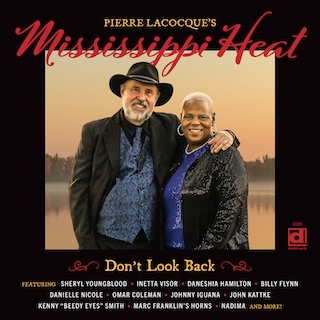
11. DON’T LOOK BACK, Mississippi Heat (Delmark)— One of Chicago’s longest running blues band collectives has delivered one of their all-time finest efforts with the forward looking title of Don’t Look Back. Mississippi Heat features founder and harpist Pierre Lacocque with his usual blend of regular members and guests, a number of whom once played in the band. For the record, this is Pierre’s 14th album since Mississippi Heat debuted with Straight From The Heart in 1992. And yet, he describes Don’t Look Back as “the bluesiest project I’ve done in years” with 14 original songs written by Pierre during Covid. He used a time of destruction to create something constructive that will go down as one of the top blues albums of 2025. The individual players in Mississippi Heat’s history reads like a local blues hall of fame: the late Carl Weathersby to whom the album is dedicated, Bob Stroger, Little Smokey Smothers, Billy Flynn, John Primer, Lurrie Bell and Robert Covington. …
Don’t Look Back literally blasts off with “You Ain’t The Only One,” a direct but empathetic statement in song that reminds the listener that they aren’t the only person who feels like that. “Are you barely holding on?/ Stuck in a life that’s all gone wrong?/ Well you ain’t the only one/feeling that way.” Chicago blues singer Sheryl Youngblood tours with Mississippi Heat now and delivers the message here on the album’s opening song. She’s supported by a trio of background singers who once backed Aretha, now known as Nadima: Nanette Frank, Diane Madison and Mae Koen. What a vocal 1-2 punch! Instrumental solos by guitarist Giles Corey and Pierre on harp are also a knockout. …
Mississippi Heat and Don’t Look Back is a bridge between 20th Century Chicago Blues and the development of the blues in our current century. The vitality of this album bodes well for future releases from Mississippi Heat and their fellow travelers on this musical onramp to the future. Full review by Greg Easterling at Chicago Blues Guide.

‘You Ain’t the Only One,’ Mississippi Heat, from Don’t Look Back
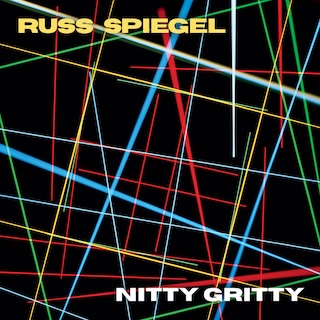 12. NITTY GRITTY, Russ Spiegel (Ruzztone Musi)— Nitty Gritty is guitarist Russ Spiegel’s seventh album, and although most of his earlier albums contain mostly originals, for this album Russ wrote only four compositions with everything else being covers done in ways that are different than the usual versions of the songs he selected. It is an eclectic album and in Russ’s own words, “I chose tunes that feature my guitar playing in different genres and styles of jazz, from swinging, earthy blues to folk and Latin rhythms to groovy and outright rocky tunes.” Russ mentions some favorite influences on the guitar, including Pat Metheny, John Scofield, Ed Bickert and Bola Sete. Accompanying Russ on this adventure is his usual trio with Jim Gasior on organ and piano, and Lucas Apostoleris. Guests, Tim Armacost on tenor sax and Kurt Hengstebek on bass, play on about half the tracks. … So let’s take a look at the variety that Russ has bestowed on us here. “Soul Station” is classic Hammond B3 driven soul jazz originally composed by Hank Mobley. On Ellington’s “Prelude to a Kiss,” Russ eschews the tune’s usual ballad treatment and instead gives it an upbeat samba drive. Hearing ‘Prelude’ in upbeat mode gives the well-known song a different flavor altogether. Whereas the Beatles’ “Norwegian Wood” is usually given an up tempo 6/8 modal vamp, Spiegel instead keeps it in a relaxed folk style workout for the acoustic guitar. Russ’s self-penned title track, “Nitty Gritty,” uses distorted guitar in a heavy funk jazz style similar to Medeski, Scofield, Martin & Wood. Full review at Jazz Music Archives.

‘Norwegian Wood,’ Russ Spiegel, with Jim Gasior (organ), Kurt Hengstebeck (electric bass), and Lucas Apostoleris (drums) from Nitty Gritty
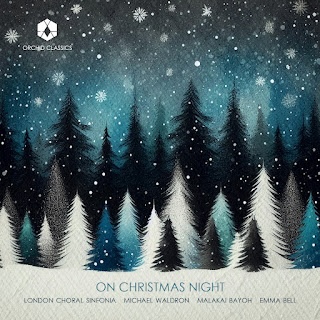 13. ON CHRISTMAS NIGHT, London Choral Sinfonia, Michael Waldron, Emma Bell, Malakai Baytoh (Orchid Classics)— For their second Christmas album, Michael Waldron and London Choral Sinfonia explore new and unusual versions of the more traditional Christmas tunes. On Christmas Night on Orchid Classics features music by Percy Fletcher, Jim Clements, Howard Blake, Harold Darke, Alec Rowley, Gustav Holst, Adolphe Adam and Iain Farrington along with some traditional tunes with soloists Emma Bell (soprano), Malakai Bayoh (treble), Martha McLorinan (mezzo-soprano) and Jimmy Holliday (bass), with four new orchestrations by Owain Park.
All the items are beautifully performed by choir and string orchestra, with the addition of harp, percussion, keyboards and trumpets at various times. The result is a well-upholstered and rather different look at a number of familiar classics along with some lesser-known gems, with Owain Park’s orchestrations meaning that Waldron has been able to cast his net quite widely.
RVW’s “Fantasia on Christmas Carols” is moderately well-known, but Holst’s “Christmas Day” rather less so. Here in Owain Park’s orchestration the choir and orchestra make a strong case for its appealing mix of tunes, very effectively strung together, with fine solos from choir members Martha McLorinan and Jimmy Holliday. Bob Chilcott’s arrangement of “Away in a Manger” uses a rather different tune to that best-known in the U.K., with Chilcott opting for the original American version. It makes a rather different, very effective take on a classic. Follow this link to the full review by Robert Hugill at Planet Hugill.

‘Away in a Manger,’ London Choral Sinfonia, arranged by Bob Chilcott, from On Christmas Night
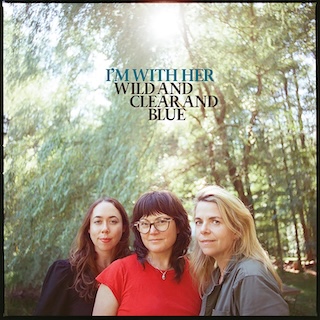
14. WILD AND CLEAR AND BLUE, I’m With Her (Rounder Records)– On their long- awaited sophomore LP Wild and Clear and Blue, I’m With Her now bring their luminous harmonies to a soul-searching body of work about reaching into the past, navigating a chaotic present, and bravely moving forward into the unknown. In a departure from the stripped-back intimacy of See You Around—a 2018 release that turned up on best-of-the-year lists from the likes of the New York Times—Wild and Clear and Blue centers on a far more elaborate sound informed by the trio’s intensified sense of musical kinship. All multi-Grammy- winners with deep roots in the folk scene, Watkins, Jarosz, and O’Donovan first discovered their near- telepathic chemistry during an impromptu performance at the 2014 Telluride Bluegrass Festival, then co-founded I’m With Her and began touring extensively and performing at acclaimed festivals across the globe.
Produced by Josh Kaufman—a member of Bonny Light Horseman and multi- instrumentalist/songwriter/arranger/producer who’s worked with Bob Weir and The National—Wild and Clear and Blue ultimately adds a bold new urgency to their delicate entangling of lived-in narrative, fable-like storytelling, and nuanced reflection on cycles of life.

‘Wild and Clear and Blue,’ official video of the title track from the new I’m With Her album
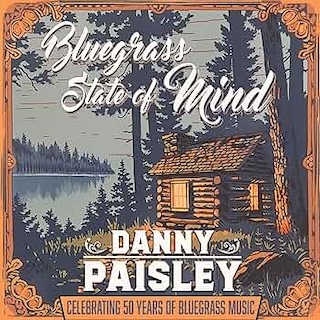
15. BLUEGRASS STATE OF MIND, Danny Paisley (Pinecastle Records) —For a half century Danny Paisley has been a stalwart practitioner of the traditional bluegrass music he’s been absorbing since he was a lad. Another solid blast of tradition, Bluegrass State of Mind is also a comeback of sorts: Paisley is returning to action after beating throat cancer, and he’s sounding more formidable—and versatile–than ever. Backed by giants of genre tradition, including Darrin Vincent on bass, Scott Vestal on banjo, Andy Leftwich on guitar, mandolin, and fiddle, Josh Swift on dobro, Greg Cole on percussion, his son Ryan Paisley on mandolin and vocals, with Sage Palser adding additional vocals, Paisley puts the hurt on Hank Williams’s “Six More Miles” (the B side of his classic 1948 hit, “I Saw the Light”), slowing the original tempo, and delivering a measured vocal revealing the dulling inner desolation the song’s protagonist can’t hide as he’s about to bury his beloved; puts epic ache into the David Stewart-Mark Brinkman heartbreaker, “Till Lonesome Comes Around”; and gets into a feisty talking blues groove on another Stewart co-write, “Cream in My Coffee,” in counseling ditching the 9-to-5 schedule and getting tight with a loved one. Like the music he loves, Danny Paisley is alive and well. –David McGee

‘Six More Miles,’ written by Hank Williams, released as the B side of Hank’s “I Saw the Light,” 1948), Danny Paisley, from Bluegrass State of Mind

16. BLUEGRASS, WDR Big Band featuring Darol Anger & Mike Marshall (MCG Jazz)– Virtuoso Americana violinist-composer-teacher (and founding member of the David Grisman Quartet) Darol Anger experienced a dream in which he found himself on a German television show, playing bluegrass with his long-time partner (of 42 years) in roots music virtuosity, mandolinist-guitarist Mike Marshall, backed by a big band. Over the Atlantic, in Germany, Arnd Richter, producer of the acclaimed WDR Big Band, shared his idea for a hybrid concept mating bluegrass with big band arrangements with WDR founder/producer Bob Mintzer, who has made a notable career of hybrid big band arrangements mating seemingly disparate styles in unexpectedly seamless ways. In his liner notes for this release, Mintzer speaks of researching Marshall’s “vast catalogue” and realizing “there was a commonality between what he was doing and what the WDR Big Band could provide as a setting for the music at hand.” He adds: “Further inspection revealed that Mike and Darol Anger had collaborated on numerous projects together and clearly had an incredible musical bond.” …
For his part, Marshall recalled “we had the incredible experience of spending an intensive week rehearsing, recording and performing our own music with one of the greatest big bands of all time. And we had the pleasure of doing it with someone who we consider a mentor, a musical hero and now a friend, Bob Mintzer. Bob completely understood how this incredible band could be interwoven into the fabric of our otherwise intimate string band music. He wrapped us up in this warm blanket of sound with his amazing sense of harmony, color and rhythmic interplay, never losing the real essence of the music the way Darol and I might play it as a duo.” Anger adds: “As the fiddler of note in this scenario, I can happily say that this recording constitutes a career peak, a highlight, and an astonishing privilege. To hear our composition refracted through the mind of a musical giant such as Bob is an experience that few fiddlers may ever get. … And to perform within a super-excellent, classic big band is pretty close to a unique experience in these days of electronically generated musical constructs.” Follow this link to the full review, ‘Wherein Everyone Shines,’ in Deep Roots.

‘Elzic’s Farewell/Yew Piney Mountain,’ two traditional tunes from the late 1800s, as performed by Bob Mintzer and the WDR Big Band featuring Darol Anger & Mike Marshall; solos by Johan Hörlen (saxophone) and Ruud Breuls (trumpet), from Bluegrass
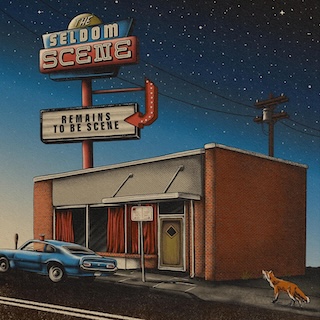 17. REMAINS TO BE SCENE, The Seldom Scene (Smithsonian Folkways)– Seldom Scene banjo master Ben Eldridge passed away in April 2024, joining three of the legendary bluegrass band’s lineup in Heavenly reward, but not before penning moving, reflective liner notes for Remains to Be Scene, which itself features the final appearance of guitarist Dudley Connell, a rock in the second-generation Scene lineup for almost 30 years. How appropriate, then, for the group to kick off its perfect—yes, perfect–new long player with a Ray Davies country-flavored tune, “Last of the Steam Powered Trains,” in which the lyric “I’m the last of the blood and sweat brigade” speaks directly to the Scene’s indomitable spirit. Rolling along, the Scene offers not one but two Dylan covers (the warm and tender “Farewell Angelina” and the oft-recorded “Walking Down the Line,” an occasion for hearty group vocals and lively instrumental solos); a Woody Guthrie tune (a sprightly “Hard Travelin’,” inspired by the Flatt & Scruggs version and blessed by Ron Stewart’s sturdy baritone lead vocal and spare, precise banjo accompaniment); and an aching group harmony reading of Reno and Smiley’s bluegrass heartbreaker, “I Could Cry.” Amidst tears and laughter in song, The Seldom Scene’s aim is ever true. –David McGee

‘I Could Cry,’ the Reno and Smiley evergreen covered by The Seldom Scene on Remains To Be Seen
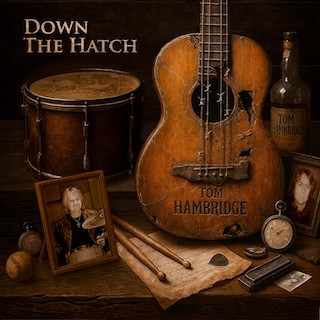 18. DOWN THE HATCH, Tom Hambridge (Quarto Valley Records)– To blues and blues-rock fans, Tom Hambridge is likely best known as a producer with a staggering resume over the past quarter century: some 100 albums bear his producer credit, with multiple Grammy winners and multiple Grammy nominations among them. Most recently, he’s racked up Grammy wins and Grammy nominations for producing, playing, and singing on albums by Buddy Guy, Keb’ Mo’, Taj Mahal, and all of Christone “Kingfish” Ingram’s studio efforts (662 being a Grammy winner) and his 2023 Live in London, which means Hambridge has essentially guided the young blues phenom into the blues hierarchy. Anyone familiar with his productions also knows he’s a prolific songwriter, a solid drummer, and an earthy vocalist. The list of albums to which he has contributed as a producer, songwriter, musician, even a liner notes writer is fairly mind-boggling (check his Wikipedia entry here). Somehow, beginning in 1996, he’s managed to carve out an impressive career as a solo artist and band leader. His solo efforts have much to recommend them, but as he approaches his 65th birthday (December 20), Hambridge is following his friend Buddy Guy’s example of aging gracefully. Arguably, his 2023 album, Blu Ja Vu (#41 on the Deep Roots Elite Half-Hundred, 2023), showcased his finest solo work to that point, only to be superseded by his new solo effort (his ninth such effort), Down the Hatch. The one-man juggernaut rolls on. …
With “Willie Dixon’s Gone” the album roars out of the gate at a brisk gallop fueled by guitar and drums with a rousing vocal to boost this red-hot recollection of the good old days, even as he laments the present state of affairs in the aftermath of the great blues songwriter’s departure from this mortal coil. “Good times ain’t as good as they used to be/I don’t feel as cool in a cool, cool breeze/women ain’t as willin’, whiskey ain’t as strong/the blues ain’t as blue since Willie Dixon’s gone..,” This powerhouse attack was a Hambridge-Richard Fleming co-write with George Thorogood for the latter’s 2011 album, 2120 South Michigan Ave. In a fine performance, Thorogood met the demands of the song’s urgency, but the electrifying blend of Hambridge’s freewheeling vocal and McNelley’s relentless guitar compares favorably to Thorogood’s intense reading. Elsewhere, wise decisions, exemplary songwriting, emotionally resonant lyric readings, and inspired arrangements are perfectly executed in elevating the singer’s despair in the simmering blues of “What Might Have Been”; in the lubricious stomp and apocalyptic desire (cleverly expressed in passages such as “lawyer wants a case/I want to get with you like a birthday wants a cake..”) animating “I Want You Bad”; and in “Start Drinking Early Day,” a witty catalogue of woes cured by taking solace in alcoholic beverages pre-emptively, before the blues pile up and pile on with Hambridge’s sang-froid in accepting his liquid destiny enhanced, or made to seem inevitable, by McNelley’s upbeat syncopated electric picking. Follow this link to the full review, “The Juggernaut Rolls On,” in Deep Roots
‘Willie Dixon’s Gone,’ Tom Hambridge, from Down The Hatch
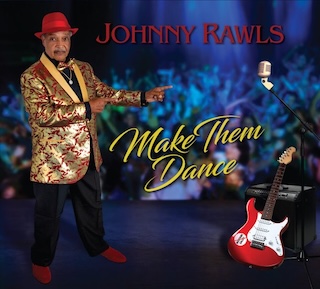 19. MAKE THEM DANCE, Johnny Rawls (CatFood Records)– In his Jim Gaines-produced Make Them Dance, 74-year-old soul survivor Johnny Rawls keeps faith with the classic foundation of his productive career. Gaines, beloved and acclaimed for his work with a Hall of Fame roster of artists, died shortly after finishing these sessions, which rank with the richest of his own lengthy career. In addition, the smoldering come-hither love ballad, “Move in My Direction,” one of the album’s most stirring moments, sax-enriched by Andy Roman with sultry background vocals by Kimberly Horton and Trinecia Butler, is co-written by Gaines’s widow, Sandy Carroll, a fine singer in her own right. Elsewhere, listeners can move in Johnny’s direction through his wry observations on income inequality—meaning his dollars are stretched thin trying to satisfy his beloved’s tastes—in the thick, heartbeat rhythm and protesting horns of “Costs Too Much.” Even better, ranking with Rawls’s finest performances in fact, the cautionary midtempo ballad “Swimming with the Sharks” offers his wounded, deep-blues recollection of a gal who delighted in living on the edge, a drama rich in unsettling heft thanks to soaring horns, foreboding organ, stinging guitar and a Latin-esque taste of congas. Grooves aplenty here, amidst a mess o’ truth about life its ownself. Full review by David McGee, “Wherein the Classic Soul Flame Burns Bright,” in Deep Roots.
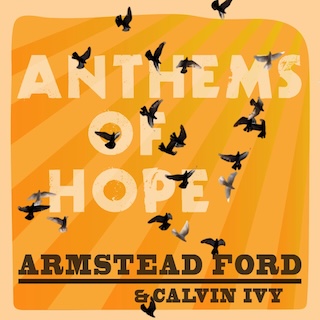 20. ANTHEMS OF HOPE, Armstead Ford & Calvin Ivy (God’s Harvesters)– Armstead Ford is an independent artist with an old soul. The St. Louis-born singer-songwriter prefers the old songs of Zion, as well as newly composed songs written and arranged in the traditional style. Anthems of Hope, Ford’s new release featuring fellow singer Calvin Ivy, showcases his fealty to traditional gospel.
Of the album’s ten tracks, two in particular merit special attention. One is Ford’s “I’m Gonna Sail Away.” We hear him delivering this unaccompanied spiritual-like piece at his mother’s funeral, held in April 2023 at Rising Star Missionary Baptist Church in St. Louis. Four months later, Ford found himself singing the song at his father’s home going service. Follow this link to Bob Marovich’s review in Deep Roots.

‘I’m Gonna Sail Away,’ Armstead Ford, from Anthems of Hope
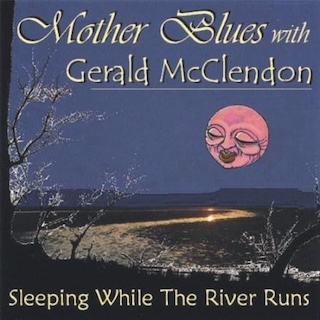 21. SLEEPING WHILE THE RIVER RUNS, Mother Blues with Gerald McLendon (Sleeping Dog Records)— Although it first came out twenty years ago, this collaboration with the Mother Blues band continues to pack a powerful punch as it allows Gerald McClendon to showcase his blues-based vocal stylings on everything from soul-infused ballads and swampy blues to the R & B numbers that have made McClendon such a popular live draw around these parts. While McClendon’s incredible vocals twist and adapt to every musical style on Sleeping While the River Runs, this passion project wouldn’t be possible without the many contributions from Steve Bramer who penned the majority of the 17 songs featured on this release via his own Sleeping Dog label. Bramer also produced Sleeping while the River Runs and plays guitar, bass, keys and percussion as he fronts the talented Mother Blues crew. …
Although this was first released in 2005, Sleeping While the River Runs, remains relevant twenty years later. This could be because this kind of music never goes out of style and McClendon, like the great soul singers of old, has a timeless voice that works perfectly with all Bramer’s stellar material. McClendon comes out swinging and slinging the heavy Stax sound on the first track. “Pass You By” is reminiscent of the old soul ballads from the sixties. But McClendon is nothing if not versatile as proven on songs like “Smokescreen” where he easily segues from sixties soul to old-school blues, with some killer guitar riffs from Bramer thrown in for good measure. …
Sleeping While the River Runs serves as a testament to the lasting power of soul, gospel and blues as it showcases the voice of the man with the pipes to pull it off. Gerald McClendon conBtinues to prove time and time again why his “Soul Keeper” moniker is well-deserved. Full review by Robin Zimmerman at Chicago Blues Guide.

‘Pass You By,’ Mother Blues with Gerald McLendon, from Sleeping While the River Runs
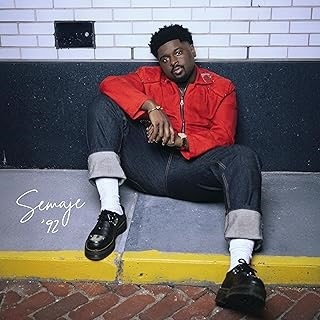
22. ’92, SEMAJE (Maje Entertainment/Tyscot)– SEMAJE is a young gospel vocalist whose frictionless tenor evokes fellow Detroiters J Moss and Deitrick Haddon, and whose style has been variously called “millennial funk” and “neo-soul.” Perhaps not coincidentally, then, on his album ’92, SEMAJE covers “Watch Me Praise Him,” the Deitrick Haddon and the Voices of Unity selection from 2007. With Deitrick’s ex-wife Damita on lead, the song channels couplets from the Biblical Gospel Singers’ late ‘60s hit, “I Come to Praise Him.”
The brief nine-track album—’92 representing SEMAJE’s year of birth and the ‘90s vibe of the music—is high energy and earnest, sunshiny optimism, with effusive singing about praise, hope, and encouragement. Examples are the bouncy “Green Light,” a song about God’s love through salvation, and the equally buoyant “A Ok” and “Fine,” which offer shoulder-shaking declarations about the power of faith and staying the course. SEMAJE does his best singing on the single “I Rely,” a lovely ballad that emphasizes one of the album’s lyrical threads: we are human and we make mistakes, but God loves and protects us anyhow. It’s the only mellow moment on the album and an indicator that SEMAJE can deliver a pewburner when needed. Follow this link to the full review by Bob Marovich in Deep Roots.

‘Watch Me Praise Him,’ SEMAJE, channeling couplets from the Biblical Gospel Singers’ late ’60s hit, ‘I Come to Praise Him.’ Featured on the album ‘92
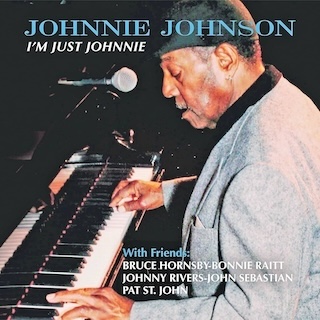 23, I’M JUST JOHNNIE, Johnnie Johnson (Missouri Morning Records)– The late, great Johnnie Johnson holds the distinction of being a musical artist many have heard but may well have never heard of. He’s the versatile piano player enlivening many of Chuck Berry’s hits over the first two culture defining rock ‘n’ roll decades of Chuck’s career. Millions heard and bought those records but fewer of Chuck’s fans heard Johnnie Johnson as an in-demand accompanist and band leader at the forefront of the St. Louis blues scene prior to his hiring young Chuck to replace a disabled member of Johnson’s Sir John Trio for a New Year’s Eve gig to ring out 1952, and later, in the ‘80s, as a member of the St. Louis-based The Sounds of the City and as an accompanist for other blues artist passing through the Gateway City.
(The sides here are from sessions recorded in 2003 and 2004 and hidden away in a vault until now)–a dozen songs at least, with a few being Johnnie Johnson originals and others featuring a number of high-profile guests making significant contributions to what sound like high-spirited sessions. Thus the content of a most welcome new Johnnie Johnson long player, titled I’m Just Johnnie, on which he sings some but mostly plays like a man possessed and with a vitality belying his years. Also, humility being one of Johnnie Johnson’s defining character traits, listeners will find him not calling attention to himself but playing exactly what needs to be played and not one note more. Follow this link to the full review, ‘Channeling Victoria, Remembering Johnnie,’ in Deep Roots.

‘Let the Good Times Roll,’ Johnnie Johnson, with co-lead vocal by Bruce Hornsby, and Bonnie Raitt on slide guitar, from I’m Just Johnnie
 24. RED CAMEL COLLECTIVE, Red Camel Collective (Pinecastle Records)– Talk about bluegrass bonafides. The principal members of Red Camel Collective—husband and wife Heather Berry Mabe and Tony Mabe, Curt Love, and Jonathan Dillon—have put together an impressive debut album while continuing as Junior Sisk’s band. Their band name, in fact, is an homage to Sisk and his beloved tune “The Man in Red Camels,” a touching reminiscence focused on an elderly gent recognizable by the Red Camel overalls he always donned when plowing his fields. The tight musicianship, the expressive vocals, the heart touching songs—you recognize the standard of excellence Junior surely had a hand in establishing.
The 10 tracks here are equally divided by Heather Berry Mabe originals and inspired covers of vintage country and bluegrass gems. The Collective’s sound is further enhanced at points by contributions from fiddlers Stephen Burwell (on five numbers) and none other than Michael Cleveland on the album closing toe-tapper, “Last Time I Saw Him,” the Michael Masser-Pam Sawyer co-write that was a Top 20 hit for both Diana Ross and Dottie West in 1974, with Ross’s rousing version blending pop, Dixieland, and country elements (including, Beyoncé, a banjo—no, you didn’t discover the instrument) whereas West stuck to more traditional ‘70s country style (meaning the arrangement had a pop lilt but nothing as extravagant as the Ross version produced by Masser and arranged by Michael Omartian and Gene Page). RCC’s version hews closely to West’s version but with bluegrass mandolin chop and high lonesome harmonizing on the story about a woman realizing her man, who had made off with a bundle of her cash to seek brighter pasture for the couple, wasn’t coming back. With Sharon White and Suzanne Cox joining Heather in evocative harmony, Cleveland steps in with a tear-stained fiddle solo before the women join voices in repeating the title sentiment as the song fades, emphasizing their fading hope in the gent’s return. Follow this link to the full review, ‘Exercising the Collective Will,’ in Deep Roots.
![Red Camel Collective - Roll On Mississippi [Official Video]](https://i.ytimg.com/vi/6NpqFIyCK9k/hqdefault.jpg)
‘Roll on Mississippi,’ a 1981 hit for Charley Pride written by Kye Fleming and Dennis Morgan. Heather Berry Mabe, lead vocal and guitar; Jonathan Dillon, mandolin; Tony Mabe, banjo; Curt Love, bass; Stephen Burwell (not shown), banjo. From Red Camel Collective.
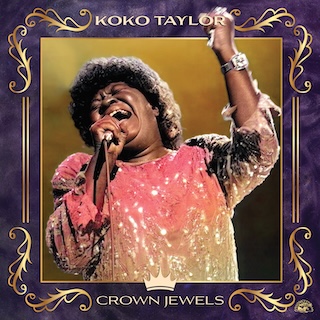
25. CROWN JEWELS, Koko Taylor (Alligator Records)– When it comes to this jaw dropping overview of a powerhouse artist’s most productive years, it may well be best to simply say “Wow!” and let the music speak for itself. In a recording career with Alligator Records spanning 1975 to 2007, Koko Taylor delivered many, many knockout punches beyond the dozen tracks assembled here by Alligator founder/president/producer Bruce Iglauer; but then it’s also fair to say this collection packs a mighty wallop on its own, featuring performances rich in all the gusto, fervor, grievance, empathy and unrelenting heat Koko always brought to the stage and studio. These range from Koko’s rollicking remake of her definitive 1966 workout on Willie Dixon’s “Wang Dang Doodle”; to a merciless dissection of her philandering paramour’s woman in “Mother Nature” (Koko being the matriarch in question who is not to be messed with) aided by guitarist Criss Johnson’s pitiless, searing guitar retorts and Carey Bell’s apocalyptic harmonica solo; to her freewheeling reading of Dorothy Labostrie’s wry evergreen, “You Can Have My Husband”; to the consoling comfort (with great assist from a propulsive groove keyed by “Professor” Eddie Lusk’s lively organ ripostes) she offers on Willie Mitchell’s “Come to Mama.” So, yes, wow. Now just listen. –David McGee

‘Wang Dang Doodle,’ Koko Taylor’s remake of her 1966 classic, featured on Crown Jewels
On the Streets cover Sacconi Quartet
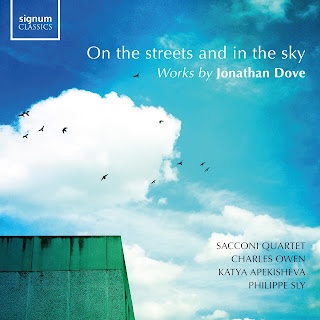
26. ON THE STREETS AND IN THE SKY: WORKS BY JONATHAN DOVE, Sacconi Quartet, Philippe Sly (baritone vocal);Charles Owen & Katya Apekisheva (pianos) (Signum Classics)– On the streets and in the sky on Signum Classics features a selection of works by Jonathan Dove with the song cycle Who Wrote the Book of Love? at its center, performed by baritone Philippe Sly and the Sacconi Quartet, with the Sacconi Quartet also playing Dove’s quartet “On the streets and in the sky” and “Vanishing Gold,” with the piano duo Charles Owen and Katya Apekisheva featured on “Between Friends.” In fact, the album could easily have been called Between Friends as it celebrates friendships and collaborations. Both Charles Owen and the Sacconi Quartet have recorded Dove’s music before, on Signum’s disc In Damascus [see my review], and the music on this disc creates an extended network of close links.
Dove’s second string quartet, On the streets and in the sky, was commissioned by the Sacconi Quartet to celebrate their 20th anniversary. Dove’s writing of it arose during the pandemic and its music reflects the strangeness and intensity of that time. “Driving” begins with a familiar Dove-like regular train rhythm yet it is imbued with anxiety that, as the rhythms become disconnected, become more violent, yet the movement ends in an eerie silence.
When listening you can simply sit back and enjoy the music, crafted by Penman into a varied and engaging suite where minimalism, jazz and other elements are woven together. Or you can read the quotations, which are fully presented in the notes, and try to link up the inspiration with the music. Not everyone will feel the link in the way Penman does, and we need to enjoy the suite in the spirit that it is presented rather than worrying too much. And besides, Penman promises that a tree will be planted for every copy of the album purchased. Full review by Robert Hugill, “Music of Friendships and Collaborations,” in Deep Roots.

‘Who Wrote the Book of Love?’: VI. Gallant Love, Sacconi Quartet, Philippe Sly (vocal), from On the street and in the sky: Works by Jonathan Dove
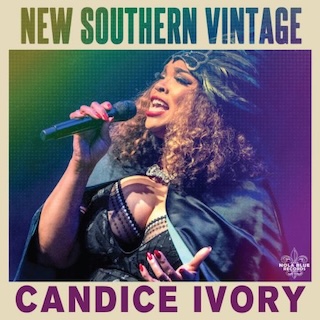 27. NEW SOUTHERN VINTAGE, Candice Ivory (Nola Blue Records)— In 2023, Candice Ivory released her tribute album, When The Levee Breaks: The Music of Memphis Minnie to much acclaim. With this record she explores the “iconic folk form as well as the heroines and heroes who created it”. Her liner notes further provides insight into her direction, “Today blues is a global music, known by and cherished by people all over the world. But its roots are in the American South, in places like Memphis and Mississippi, where I first heard the blues, and in nearby outposts like St. Louis where I live now.” She again cites Memphis Minnie as one of her greatest inspirations, and also includes her great uncle Will Roy Sanders who fronted the Memphis band The Fieldstones in the 1970s and 1980s. … For this album, Candice is joined by her tour band, The Blue Bloods for the first eight songs. The Blue Bloods include Robert Allen Parker on guitar, Adam Hill on guitar, Khari Wynn on bass and Donald R. Johnson on drums. Ben Levin also guests on piano on most tracks. She brings in several guests on individual songs including Jimmy “Duck” Holmes, the caretaker of the Bentonia, Mississippi School of Blues Guitar. While New Southern Vintage blues looks back to the past, the “New” references that it also fits into the future. Thus, she brings in new young artists like Ben as well as international artists who are from around the globe but into the Southern sounds. Khari Wynn who is part of her band is a young bass player who plays with Public Enemy. She states in her liner notes “that no matter how far we travel down the blues highway, we can always go back home to the land where the blues began.” Full review by John Stackseder in Blues Blast Magazine.

‘Blue Blood,’ Candice Ivory, from New Southern Vintage
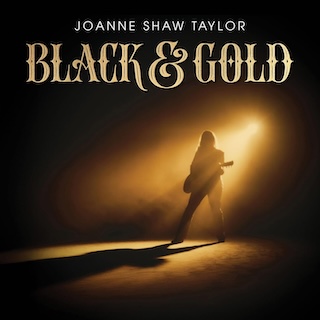
28. BLACK & GOLD, Joanne Shaw Taylor (Journeyman Records)– The hint of techno amidst the swirling textures of “Who’s Gonna Love Me Now?” adds heft to the breakup sorrow informing the title’s recurring rhetorical question. In “All the Things I Said,” a driving keys-and-guitar arrangement supports cascading multi-tracked voices lamenting, at once, “all the things I said…all the things I should have said instead” in a bald-faced confession of wrong turns made in life, as a stinging guitar solo emphasizes the weight of what’s been lost. In “Don’t Miss Me When I’m Gone,’ the cinematic Bonamassa-like roiling soundscape of gut rattling guitars, drums and keys, with the occasional heavy metal stomp for good measure, frames—and embodies–the singer’s anguished mea culpa, sung with the raw, ferocious intensity of one who realizes “time has run on out of grace/can feel it is my fate/to just slip away/don’t miss me when I’m gone…” A redoubling of intensity, vocally and instrumentally, fuels a fierce take on Sam Sparro’s big U.K. hit from 2008, “Black and Gold,” from which this long-player takes its title. On her 10th album, British-born blues guitarist-singer-songwriter Joanne Shaw Taylor delivers in grand fashion in every aspect of her artistry, but especially in the blunt force honesty of confessional lyrics in which she lacerates, with impunity, a former significant other but doesn’t absolve herself of responsibility either. A new beginning, this? Stay tuned. —David McGee

‘Black and Gold,’ Joanne Shaw Taylor, a fierce take on Sam Sparro’s U.K hit from 2008, and the title track of Joanne Shaw Taylor’s latest album
COMING BACK ALIVE, Imari Tones (Kitchen Knife Records)–Taking their inspiration from ’80s heavy metal/hair bands, Imari Tones is one of today’s hardest rocking Christian bands. That they hail from Japan, where less than one percent of the population identifies as Christian, makes their ascendance more impressive. Their mix of Christian imagery with Japanese history and culture makes them distinctive. I’d go one step further and suggest they are closer to a Christian punk band. From their no-holds-barred vocals (now in English), outbursts of vigorous evangelical preaching, snarling guitar, scattershot melodies, and Shinryu’s anarchic drumming, Imari Tones have more in common with the Sex Pistols than Van Halen. Plus, evangelizing for a religion that 99 percent of the citizens of their home country don’t espouse makes their message countercultural. Follow this link to Bob Marovich’s full review in Deep Roots.

‘Small Flame,’ Imari Tones, from Coming Back Alive

30. BLUES IN HAND, Al Basile (Sweetspot Records)— This is the 21st album released by Al Basile. Al plays cornet and provides the lead vocals. Mark Teixeira on drums, Bard Hallen on bass, Bruce Bears on keyboards, Jeff “Doc” Chanonhouse on trumpet, Doug James on trumpet, and Kid Andersen on guitar completes the band line-up for the album with Jhett Black guesting on guitar on “Ain’t What You Say”. Al says this album is more personal than his other releases as the songs are based on some of his recent experiences.
The album opens with “All Your Lies” as he tells “You lie so easy, you lie so plain, it makes me want to believe you all over again. Al’s laid-back vocals slide along moving into a cornet solo and before concluding with a guitar solo. He declares “Blues Is My Roommate” noting “Woke up this morning, blues grinning in my face. Said get used to it partner, cause I’m moving on in your place.” The horns and guitar establish a low emotional pull with a an even keeled drum pulling things along all establishing a lonely man in some depression. The guitar, trumpet and organ all join to establish “Blues After Blues” as Al cries “Blues got drunk, staggered out the door. Right back next morning, looking for more”. …
The album as mentioned in several of song is a continuous story of a man working his way through some troubling relationships and times. The songs are low key with Al letting his cornet feature into much of the story. Most of the songs depict a man lost in some despair and lonely. Only at the end does he indicate that there are some true friends that can help him through. The album presents the blues in its rawest form, no screaming high notes, just laidback, slightly jazzy blues with a feel that one should just sit back in a chair with a glass of a smooth bourbon to melt the blues away. Follow this link to the full review by John Stacksteder in Blues Blast Magazine.

‘Blues After Blues,’ Al Basile, from Blues in Hand
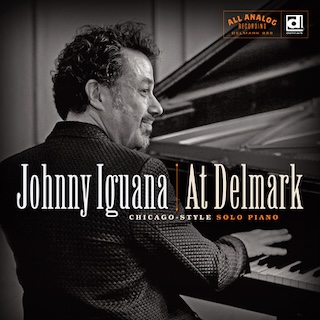 31. JOHNNY IGUANA AT DELMARK–CHICAGO STYLE PIANO (Delmark Records)— Johnny Iguana’s latest album is quite a departure for the keyboard wizard whose music is most often found as part of a Chicago blues band — and he’s worked with some of the best, including Junior Wells and Otis Rush. The album is a solo session, just Iguana and a vintage 1917 Steinway B that lives at the home of Delmark Records. The session was recorded as if it were a club show — in unedited single takes, and straight to analog tape. The sound it makes is simply splendid. ,,,
Iguana launches the session with a rollicking rendition of a Little Brother Montgomery blues, “Bass Key Boogie,” followed by a dynamic, orchestral-sounding version of Neil Young’s “Heart of Gold.” The original “For Dancers Only” highlights Iguana’s unique creativity, mixing doo-wop, boogie-woogie and danceable rhythms into a land of many dances. …
At Delmark is a masterful effort. It rocks, it swings, it draws from jazz and classical sources, it lionizes the blues piano — and it gives Johnny Iguana a chance to display his dazzling Chicago keyboard chops in what is essentially an effervescent live concert. Full review by Jim White at Blues Roadhouse.com.

‘Heart of Gold,’ written by Neil Young, from Johnny Iguana at Delmark–Chicago Style Solo Piano
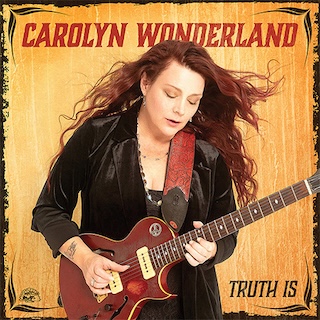 32. TRUTH IS, Carolyn Wonderland (Alligator Records)— A unique offering, Carolyn Wonderland’s CD, Truth Is, musically explodes the myth that blues is simplistic; one-dimensional. Covering almost every genre, from country to gospel, from rock to boogie-woogie to blues, the truth is this CD encompasses tunes to entice a wide variety of music fans. Her chameleon-like voice harnesses tremendous power and range, while her finger-picking guitar work ranks among the finest country blues players. Threaded with melodic, smooth guitar and keyboards throughout, this, her 13th album, also establishes Wonderland as a soulful and socially engaged songwriter. From catchy refrains to relatable personal introspection, this album has something for everyone. Ten of the 12 songs are originals, but it also includes two covers, “Orange Juice Blues” from Richard Manuel, and “Wishful Thinking,” written by Greg Wood and Eddie Hawkins. …
The album opens with a song that could easily top the country charts, entitled “Sooner or Later.” Featuring Wonderland on lap steel, the song is the first to be released as a single. And as if Wonderland’s powerful vocals weren’t enough, she’s recruited help from Marcia Ball and Ruthie Foster on two tracks: The second track, “I Ain’t Going Back,” and then the title song, “Truth is,” an upbeat and immensely fun tune featuring some very fine guitar work. …
Wonderland slips in some social commentary with a thoughtful ballad, entitled “Let’s Play a Game.” Clever lyrics penetrate Wonderland’s compelling vocals on “It Should Take,” “Flowers in Bloom,” and “Deepest Ocean Blues,” proving she can belt out a ballad one moment and transport you to the reggae-tinged tropics in the next.” Follow this link to the full review by Bob Liddycoat in Blues Blast Magazine.

‘Let’s Play a Game,’ Carolyn Wonderland, from Truth Is
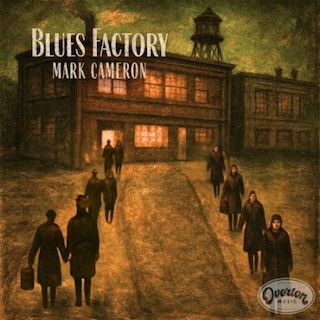
33. BLUES FACTORY, Mark Cameron (Overton Music)— Minnesota-based singer, songwriter, and guitarist Mark Cameron has been active in live music for over thirty years. Cameron began his performing career in the rich folk-rock scene of the early 1970s and brought this influence into several bands he founded during the 1980s and 1990s. Today, his focus is centered on crafting original blues songs with strong melodies and memorable lyrics. The range of Mark’s material stretches the blues beyond safe limits with a focus on “foot-stompin’, butt-shakin’ music” built for a live audience. …
The ensemble includes Cameron on lead vocals and guitar; Bill Keyes on harmonica and backing vocals; Dan Schroeder and Greg Schutte on drums; and Mark’s wife and soulmate, Sheri Cameron, on saxophone, flute, and percussion. The bass duties are shared by Nick Salisbury, Steve Hansen, and Josh Granowski. The horn section features Shane Cox on trumpet and trombone, and Zach Miller on tenor sax. Tommy Barbarella plays piano, Hammond organ, and Wurlitzer. Additional backing vocalists include Sara Renner and Tonya Hughes. …
An oft-heard criticism of blues music is that it’s too simple or formulaic, rarely reflecting modern themes. On his ninth album, Blues Factory, Mark Cameron proves otherwise. With a solid band behind him, he makes the most of his songwriting skills as he tells stories of life, love, and the complicated world in which we live. Full review by Richard Ludmerer is posted at Making a Scene.org.

‘Change Your Ways,’ Mark Cameron, from Blues Factory
34. SOUTHERN SUNSHINE, Williamson Branch (Pinecastle Records)– Traditional to the core while embracing the contemporary audience’s hunger for fresh sounds, the family band Williamson Branch seamlessly addresses all bluegrass tastes on Southern Sunshine, its fifth long player for the Pinecastle label. The Williamsons have been lauded for their positive messaging in song while at once acknowledging things don’t alway go right but needn’t be lethal blows undermining the prospects of a fulfilling life. Notable among the quintet’s many virtues: the smooth, high-lonesome harmonies of lead singers Melody (doubling the pleasure with her spirited fiddling), Kadence (also on bass), and Caroline Williamson (also on mandolin), whose heart tugging blend is that of mountain angels, whether the weather be sunny (“Come On, Sunshine”) or stormy (“The Other Side of Lonely”). On the upbeat side, Kadence’s “Carolina Heart” links her emotional yearning for her loved one to her love of the land she’s missed in equal measure, much as family patriarch Kevin Williamson does in his toe tapping ode to home and hearth, “Kentucky Highway,” wherein the sisters bring the message home with warmth and aching hearts, all in abundance. And what’s not to love about, or get a chuckle out of, the album closer, a delightful—and certainly surprising–banjo- and fiddle- fired romp (goosed along by fierce mandolin chops) through “Zip-a-Dee-Doo-Dah”? Herein the daughters soar, every bit as, well, zippy as Bob B. Soxx and the Blue Jeans were for Phil Spector in 1962. Bookending this as the album opener is another surprising choice: Allen Toussaint’s “Southern Nights” done as a bouncy bluegrass romp (with the arrangement echoing Glen Campbell’s country hit version from 1977) with the sisters kicking this off with high energy, positively buoyant harmonies over the band’s rustic toe-tapping attack Well done in all aspects, this. –-David McGee

‘Zip-a-Dee-Doo-Dah,’ Williamson Branch, from Southern Sunshine

35. THE LAST TREE, Alastair Penman (Meadowbank Music)–Saxophonist Alastair Penman‘s latest disc, The Last Tree *his fifth studio album and the third on his Meadowbank Music label) features his suite for saxophone orchestra and is the artist’s second project inspired by climate change, following his 2020 EP, Do You Hear Me? The suite was originally written for the Guildhall School of Music Saxophone Ensemble and was premiered this past November, conducted by the composer. In this studio recording, Penman has multi-tracked all fourteen parts of the ensemble.
The suite is in eight movements, each based on a quotation about climate change from a range of sources, including a Cree proverb, Voltaire, Ernest Hemmingway, Donald Trump, Antonio Guterres, Robin Wall-Kimmerer, Gandhi, Barack Obama.
When listening you can simply sit back and enjoy the music, crafted by Penman into a varied and engaging suite where minimalism, jazz and other elements are woven together. Or you can read the quotations, which are fully presented in the notes, and try to link up the inspiration with the music. Not everyone will feel the link in the way Penman does, and we need to enjoy the suite in the spirit that it is presented rather than worrying too much. And besides, Penman promises that a tree will be planted for every copy of the album purchased. Follow this link to the full review, “A Fine Place Worth Fighting For,” by Robert Hugill in Deep Roots

‘The Last Tree,’ inspired by a Cree proverb. Alastair Penman, from The Last Tree
 36. PAPER DOLL, Samantha Fish (Rounder Records)— A fierce force in modern blues rock, Samantha Fish has carved out a place as one of her generation’s most dynamic guitarists. With a catalog that veers from rootsy blues-based grit to pop swagger, and a reputation as a powerhouse live performer, she’s consistently pushed the limits of the genre. After a Grammy nomination for her 2023 collaboration with Jesse Dayton (Death Wish Blues) and sharing the stage with the Rolling Stones in 2024, Paper Doll, her newest record, arrives with a loose, road-worn chemistry and nine tracks packed with raw, electric charm.
Recorded with her touring band between shows on the road, including a stretch with Slash’s S.E.R.P.E.N.T. festival, Paper Doll brings nine fiery, emotionally charged tracks to life with a mix of arena rock energy, bluesy weight, and melodic soul. Produced by Bobby Harlow (who also helmed 2017’s Chills & Fever), the album feels like a culmination of everything Fish has honed over the years: a big guitar sound, soaring vocals, and an ever-evolving flair for memorable songwriting. …
Fish has always been a formidable guitarist, but here, she sounds more self-assured and creatively open than ever. The songs on offer here are not merely launching pads for her impressive guitar stylings, but also serve the emotion, the storytelling and the message she wants to convey. Also, there are moments of experimentation, but nothing feels forced or incoherent.
Follow this link to the full review by Fidel Bessera posted at Blues Rock Review, April 21, 2025

‘Sweet Southern Sounds,’ Samantha Fish, from Paper Doll
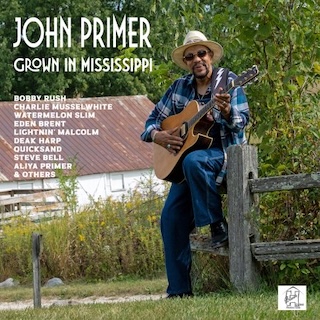
37. GROWN IN MISSISSIPPI, John Primer (Blues House Productions)– As the title tells, John Primer was “Grown In Mississippi.” Born and raised in Camden, Mississippi to a sharecropping family, John lived the blues as he grew up. Hearing the blues and Gospel as a kid gave him a true appreciation for the music that he embraced and brought to his new home in Chicago. Primer first played for tips on Maxwell Street and then advanced into Theresa’s Lounge to play with and lead the bands for many a great legend including Magic Slim, Junior Wells, Willie Dixon, and Muddy Waters. He started his own Real Deal Band in 1995 and for over 30 years he’s become a legend himself. He returned to his old home state to produced this album and landed in Gary Vincent’s studio in Clarksdale to make this album. …
The album features an all-star cast. Guest appearances by Bobby Rush, Charlie Musselwhite, Watermelon Slim, Eden Brent, Lightnin’ Malcolm, and Deak Harp help to make this a special tribute to John’s home state. Rickey ’Quicksand” Martin is on drums ecept for a pair of cuts wit Lee Williams, Harvell Thomas Jr. play bass. Billy Earheart is on piano and keys for a few cuts and Steve Bell is on harp for a couple of tracks. …
John’s tribute to Mississippi as his home state is filled with emotion and feeling. Each song is a vibrant call back to the home of his younger days that created one of the last of the old school bluesmen. I have loved his earlier work but this may be John’s finest album. I see it destined to garner notice and consideration for many awards this coming year. He has done s fantastic job creating new songs and covering some amazing cuts to deliver fourteen powerful tracks for blues lovers to enjoy. Full review by Steve Jones in Blues Blast Magazine.

‘Blues Before Sunrise,’ John Primer covers Lee Roy Carr’s classic on Grown In Mississippi
38. LAST NITE AT THE BLUEBIRD LIVE, Mike Henderson (Qualified Records)— Heart was at the center of everything Mike Henderson did. That his cardiac muscle literally gave out suddenly a year and a half ago remains shocking and sad. A musical chameleon, Henderson wrote a rich bounty of songs, wrangled the heavens and hell out of the strings of a guitar, mandolin, and fiddle, and sang with unbridled conviction. He applied it all to a mix of country, bluegrass, and the blues. Bottomless, high-octane blues, which is what Last Nite at the Bluebird – Live! is all about. This collection of highlights from Henderson’s final Monday night residency shows at the legendary Nashville songwriter’s forum display the goods for anyone not lucky enough to attend one. Like a lit match thrown into a hayloft, Henderson’s voice and guitar tones instantly set the small room aflame. Henderson’s intent with a song, whether on his own, with the SteelDrivers, or for his former bandmate in the SteelDrivers, Chris Stapleton, was to entertain with a purpose. The very idea of “Pay Bo Diddley” (molded from “Hey Bo Diddley”) and his steel rending guitar solo in it, are both thrown down firmly, the sounds of it nearly otherworldly. Throughout eight wicked songs, sequenced and unedited as if you were there, this band comprised of Henderson, Pat O’Connor on drums, Steve Mackey on bass, and Kevin McKendree on piano, takes possession of the music, and the 90 in attendance. Hopefully, there will be more to come. Review by Tom Clark for Making a Scene.

‘Weepin’ and Moanin’,’ Mike Henderson, from Last Nite at the Bluebird
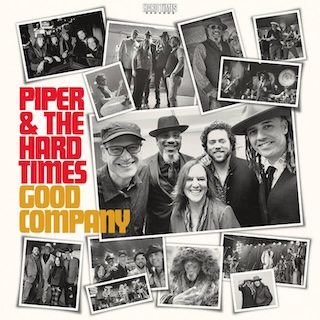
Piper & Hard Times Good Company
39. GOOD COMPANY, Piper & The Hard Times (Hard Times Records)— Following their win at the 2024 IBC’s and their debut album, Revelation, Piper & The Hard Times now deliver twelve new tracks that blend rock, soul, funk and blues. Everything you hear is original, guitarist Steve Eagon having a hand in every song, vocalist Al ‘Piper’ Green contributing to eight and drummer Dave Colella to two. This is a fun band to see live and they show that side of their character by each having a nickname to go alongside Piper’s: Steve ‘The Conductor’ Eagon is described as the “Chief Riff Officer”, drummer Dave ‘Sexy Boy’ Colella is the “Chief Rhythm Officer”, bassist Parker ‘Porkchop Funstick’ Hawkins is the “Chief Groove Officer” and keyboard player Amy ‘The Professor’ Frederick is the “Chief Soul Officer”! Also contributing to proceedings are the “Good Company Consultants”, Eddie Meyer and Charlie DiPuma, sax on four cuts, John ‘Hotfingers’ Wallum, organ on two, Lisa Oliver-Gray and Etta Britt adding background vocals throughout. … The album sets off with a bang with the title track “Good Company” which rockets along over pounding drums, driving piano and a great guitar riff, Piper’s vocals excellent. The next two tracks add sax to the blend: “Now I’m Loving You” a confession about giving up late nights and booze for a good woman, played over naggingly catchy funk guitar with sax featured throughout; “Tear It Down” has both sax men on board as the band hits a soulful stride on a song that could be deemed political: “Anyone can be a clown, no one wears the crown”. Piper struts over fuzz guitar in his “Cowboy Gucci” before “In The Meantime” slows things down a little with plenty of keyboard work and another strong riff from Steve who goes on to add a fine solo. Full review by John Mitchell at Blues Blast Magazine.

‘Good Company,’ Piper & The Hard Times, from Good Company
40. JOHN LUGGE: THE FORBIDDEN FRUIT, William Whitehead (Edition Hortus)— 17th-century composer and organist John Lugge is not a well known name, and his organ music was written for a type of instrument that no longer exists in England. For this new disc from Editions Hortus, Forbidden Fruit, organist William Whitehead travelled to Bolbec in Normandy, France to record a selection of John Lugge’s surviving works, ten of his plainchant-based pieces and three of his free voluntaries, early examples of the so-called “double voluntary.” … We do know that Lugge’s family had Roman Catholic sympathies, his brother went to live in Lisbon, his son converted to Rome and fled England. Lugge remained, but was examined by the Bishop in 1618 who wrote “I fear, and by conference do suspect that he hath eaten a little bit, or mumbled a piece of this forbidden fruit, yet I verily believe that he hath spit it all out again.” Yet these pieces hint at this forbidden fruit. Perhaps they were for private devotions or a technical exercise, or perhaps the Cathedral authorities simply ignored the old liturgical meaning of the chant. … The sound of the organ is somewhat startling at first, very up front and bright in tone. The first Gloria tibi trinitas sets the tone, a variety of instrumental lines almost dancing around the slow plainchant in a positively exuberant manner. The second and third are more restrained yet still with that sense of liveliness in the contrapuntal lines. There is something perkily scherzo-like about the fourth, followed by upfront vigor in the final two. All six together make a striking and coherent group, rather than six separate essays. Lll Much of the information about this disc is tantalizing, there is so much that we don’t know. However, the performances from William Whitehead leave us in no doubt that this music is well worth exploring and even in the more sedate pieces he brings a sense of articulation and engagement to the music that makes us sit up, pay attention and enjoy it for its own sake. Follow this link the full review by Robert Hugill in Planet Hugill.
![Voluntarie [I]](https://i.ytimg.com/vi/Ap0hrn-cSqc/hqdefault.jpg)
‘Voluntarie I,’ composed by John Lugge, performed by William Whitehead (organ) on John Lugge: Forbidden Fruit.
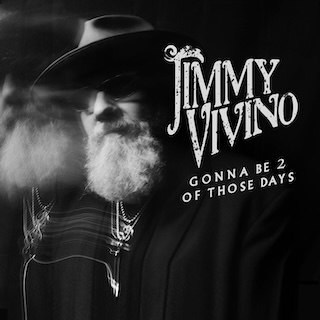
41. GONNA BE 2 OF THOSE DAYS, Jimmy Vivino (Gulf Coast Records)– For thirty years Jimmy Vivino entertained millions of viewers as a member of Conan O’Brien’s house bands, and in a professional career of 60 years he’s entertained millions more as a sideman, special guest, in Broadway shows, on the radio, with the Beatles tribute band The Fab Faux, currently with Canned Heat, in guest appearances on albums by a veritable Who’s Who of towering artists, and certainly not least of all, on his own solo albums and never ending live shows. Now signed to Mike Zito’s Gulf Coast Records label, he shows no sign of slowing down or coasting on his laurels on this splendid blues-rock showcase co-produced by Vivino with his bandmate, drummer-percussionist Rich Pagano.
On 11 Vivino originals, the artist rages, roars and ruminates over love good and bad, times good and bad and along the way offers some philosophical advice born of current affairs. In many ways Vivino defines his point of view in his song “Better Days Past” wherein he metaphorically aligns himself to his aged mode of transportation: “My automobile run on gasoline and I drive way over 55/need to hear my motor running/makes a man feel he’s alive/’cause I’m much too old now to follow with the critical mass/I’m just a man out of time, better days are in the past…” The song is a long, red-hot howl with sizzling guitar solos weaving in and around the melody and a powerhouse Pagano-led rhythmic thrust, so muscular in all its parts a listener might miss its lyrical lament of time passing.
Follow this link to the full review, “That’ll Be the Day,” in Deep Roots.

‘Better Days Past,’ Jimmy Vivino, from Gonna Be 2 of Those Days
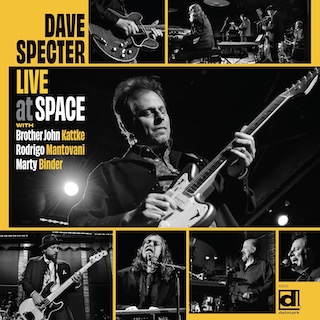
42. LIVE AT SPACE–Dave Specter (Delmark Records)— With a career that’s spanned over four decades, Dave Specter has helped define Chicago’s most significant musical export with his graceful and poetic guitar style, bridging jazz with deep urban blues while adding soulful vocals and socially aware songwriting. Many of his recordings are instrumentals, elegant and memorable, emphasizing melodic movement and composition over gymnastic guitar playing. His instrumentals don’t want for lyrics, the music moves with a natural verse, his guitar playing having its own soothing rhyme and pace. It’s a guitar style that has a unique balance and form.
On his most recent Delmark release, his 13th for the label, Specter and his crack band (Brother John Kattke, Marty Binder and Rodrigo Mantovani) offer a set of tunes recorded at SPACE in Evanston IL which demonstrate why Dave Specter is among the pantheon of great modern blues musicians. Live At SPACE is a recording which captures Chicago’s finest blues musicians at one of Chicago’s best sounding venues. …
Standout selections include the dark instrumental “Rhumba & Tonic” and “Alley Walk” which features guitar tones that push the amplifier to the limit while maintaining a delicate control of melody. Dave also takes the lead on a swinging version of the old Grateful Dead chestnut “Deep Elem Blues” and he digs deep on Sonny Boy Williamson’s “Bluebird Blues.” Specter’s own “Ponchatoula Way” might be the CD’s hidden gem, a rollicking and catchy number that could’ve been the marquee cut on a vintage Little Feat record; it’s a really memorable song that begs repeated plays. Follow this link to the full review by Mark Baier in Chicago Blues Guide.

‘Ponchatoula Way,’ a Dave Spector original from Live at SPACE

43. And I hear a voice, Vox Clamantis, Jann-Elk Tulve (conductor) (ECM Records)– Vox Clamantis, with artistic director and conductor Jaan-Eik Tulve, is an Estonian vocal ensemble specializing in performing Gregorian chant and early polyphony alongside contemporary music. Though they have a strong association with the music of Arvo Pärt, in the eight years since I first heard them in Tallinn (at the 2017 Estonian Music Days, see my review), I have experienced their performances of a wide range of music.
Their latest disc, And I heard a voice on the ECM label, was issued in time to be a 90th birthday present for the composer. The music on the disc, spanning over 30 years of Pärt’s composing life, features Nunc dimittis, O Holy Father Nicholas, Sieben Magnificat-Antiphonen, Für Jan van Eyck, Kleine Litanei and And I heard a voice. The fifteen singers of Vox Clamantis are conducted by Jaan-Eik Tulve and they are joined by organist Ene Salumae on Fur Jan van Eyck.
The recording was made in 2021/22 in Haapsalu Cathedral in the very west of Estonia. Haapsalu Cathedral, which is first mentioned in 1279, is one of the largest single-nave churches in the Nordic and Baltic countries. The recording was produced by Manfred Eicher and from the first notes of Nunc Dimittis it has a very particular sound quality. Eicher has surrounded the ensemble by what might almost be termed an aura. Nunc Dimittis is sung with a gentleness and clarity which belies the sheer accuracy and focus of the performance. Follow this link to the full review, ‘Aethereal Beauties: Vox Clamantis Celebrates Arvo Pärt @90,’ by Robert Hubill in Deep Roots.

And I Heard a Voice, the title track of an album of Arvo Pärt’s new works performed by Vox Clamantis, is, to date, the only work of Pärt’s set to sacred text in his mother tongue, with words based on a passage from the 1938 Estonian translation of the Book of Revelation, where the phrase ‘they rest from their labours’ is expressed as ‘they breathe from their labours [nad hingavad oma vaevadest].’ As the booklet essay notes, ‘the incessant repetition of these words becomes the most important image of the work, the symbol of eternal life.’
44. MY TRUTH, Emmanuel Dickson (Harmon3 Records)–Emmanuel Dickson is a gospel artist from Lagos, Nigeria, but those expecting African beats and other musical touches on his debut album, My Truth, will discover it to be thoroughly saturated with the melodies, style, and arrangements of American P&W and contemporary gospel. Not surprising: Dickson’s inspirations include Kirk Franklin and Donald Lawrence, and their influence is felt here as if they are directing the recording. For example, “Finally Free,” which is based in part on John 8:36, features perky Kirk Franklin-esque keyboard triplets and sassy singing from the background vocalists. Dickson even delivers spoken interjections like Franklin, as Jaddah offers a lovely soprano vocal. On the other hand, the conversational “Knowing You” gives listeners a chance to hear Dickson’s calm, introspective singing, complete with acoustic guitar accompaniment. The title track emerges seamlessly from “Knowing You” and closes the album. In this sermonette, Dickson offers his truth: “I am loved by God and that will always be enough.” Follow this link to Bob Marovich’s review in Deep Roots.

‘My Truth,’ Emmanuel Dickson, title song from his new album
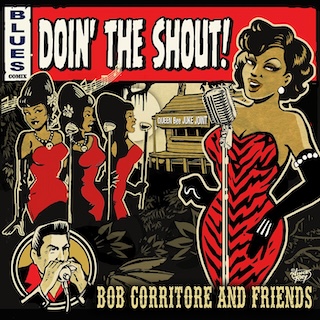
45. DOIN’ THE SHOUT!, Bob Corritore & Friends (VizzTone/SWMAF Records)– One of the foremost exponents of Chicago blues, Bob Corritore relocated to Arizona in the ‘80s but continues to champion the Windy City ethos, especially in the enduring series of & Friends projects. Doin’ the Shout! is no exception, and only the latest in a long line of outstanding long players (with the most striking covers around) featuring some of the most beloved blues veterans of our time.
This latest installment offers a possibly conceptual conceit quite distinct from its & Friends predecessors. It’s about evenly split between male and female headliners with outstanding instrumental support, all deeply invested in the personal trials and tribulations common to the genre’s fabled texts. The males sing the mean woman blues, but not exclusively: you’d have to say Bobby Rush (now 91) suffers from self-inflicted wounds in his “I’ve Got Three Problems” when he bemoans “my woman, my girlfriend, and my wife” all turning on him for reasons he’s not quite yet fathomed.
… Recorded in sessions spanning two years, Doin’ the Shout!, like all Corritore entries, underscores the blues’ timeless quality. Every tune honors and upholds Willie Dixon’s famous maxim: “The blues is about life. If it ain’t about life, it ain’t the blues.” Lots of life herein. Lots of life Full review by David McGee, “Manifesto of Mutual Misery,” in Deep Roots.

‘My First Love,’ an autobiographical blues ballad written and performed by 94-year-old bassist Bob Stroger, with Bob Corritore on harp, Jimi ‘Primetime’ Smith on guitar, Anthony Geraci on piano, and Steady Rollin’ Bob Margolin on bass. From Doin’ the Shout! by Bob Corritore & Friends
 46. PRAISE IN THE CHOIR STAND, Brent Jones (JDI Entertainment)– “The Lord anointed me to take the sound of R&B and bring it to Sunday morning,” industry veteran Brent Jones tells the audience that has assembled to participate in the live recording of his new album. “I don’t know why he anointed me for that…but I just accept the call.”
Proof of that is the product of that program. Recorded live at Friendship Baptist in Yorba Linda, California, Brent Jones and the Best Life Choir’s rafter-raising Praise in the Choir Stand offers Sunday morning gospel chock full of R&B influences.
There’s a swaggering confidence in Jones’s voice, a gospel impresario on the best of terms with the musicians, singers, and the congregation. The full-throated Best Life Choir—which is so good, it should have received co-billing on the album cover—thunders its support like an ‘80s mass choir, especially on the title track. Follow this link to Bob Marovich’s review in Deep Roots.

‘Praise in the Choir Stand,’ Brent Jones, title track from Jones’s new live album, Praise in the Choir Stand
47. ECHO EX IOVE, Israel Golani (Solaire Records)— Galileo Galilei, born February 15, 1564, who changed the world with his breakthrough discoveries in astronomy, physics, and mathematics, was the oldest son of Vincenzo Galilei, an important musician of his time who made notable breakthroughs of his own in the theory and practice of music. … But Galileo had a younger brother, Michelangelo (1575-1631), also a musician, whose music is far less well-known than the achievements of his father and his older brother. Echo ex iovefrom lutenist Israel Golani is an EP from Solaire Records (available on BandCamp) that presents six short dances by Michelangelo Galilei. The EP is something of a follow-up to Golani’s previous disc for Solaire Records, In the Garden of Polyphony, an exploration of the 16th-century French penchant for lute music, notably transcriptions of polyphonic vocal music [see my review] … Whatever musical success he had, money was clearly tight and much of his surviving correspondence with Galileo is about money. Most of his music is for lute: the ten-course lute and his book Il primo libro d’intavolatura di liutowas published in 1620. Israel Golani plays a suite of six dances beginning with a toccata, then corrente, passamezzo, saltarello and volta. There is an engagingly melodic quality to this music, but also a florid quality too. The suite makes a delightful EP with a lovely engaging quality to Golani’s playing. Follow this link to the full review ‘The Other Brother,’ by Robert Hugill, in Deep Roots.

‘Volta,’ by Michelangelo Galilei, performed by Israel Golani on Echo ex iove
 48. EVERYTHING YOU’VE EVER LIVED, Lotte Betts-Dean, Dimitris Soukaras (Delphian Records)– There is a phrase in Megan Stellar’s rather flowery booklet note for mezzo-soprano Lotte Betts-Dean’s latest disc which helps to elucidate the rather elusive nature of the program. “That melange of ambiguity and subconscious understanding lifts alongside Lotte and Dimitris’s interest in harmonic connection and the subtle stories that can be told…”.
For the disc, everything you’ve ever lived on Delphian Records, Lotte Betts-Dean is joined by guitarist Dimitris Soukaras for a recital which moves effortlessly and nearly seamlessly through Baden Powell, Ravel, Seiber, de Falla, Richard Rodgers, Burt Bacharach, My Brightest Diamond, Vincente Asencio, Debussy, Sinead O’Connor, Caroline Polachek, Britten, Asik Veysel, Jorge Cardoso, Paurillo Barroso and Armando Soares. The album is described as “exploring ideas of nostalgia, childhood memory and the state between waking and sleep.” Which covers a remarkable amount of ground. What is distinctive for me is not so much the subject matter of the songs as the way one flows into another with hardly a ripple.
This is not so much a recital of songs as a sequence, lasting just over an hour, that flows smoothly and seductively. And make no bones about it, Betts-Dean’s voice, no matter the subject she is singing about, is wonderfully seductive and beautifully smooth and partnered by Soukaras’ stunning guitar playing. That at least ten of the tracks on the disc are his own arrangements must be to his credit in creating the sense of coherence and flow. Full review by Robert Hugill, “Explaining the Unexplainable,” at Planet Hugill.

Réveillez-vous (Seiber), Lotte Betts-Dean & Dimitri Soukaras, from Everything You’ve Ever Lived
49 HOUSE OF DAVID: SEASON ONE, Various Artists (Capitol Christian Music Group)– “Got a harp in one hand and a sling in the other,” sings veteran Christian Contemporary Music artist Chris Tomlin. This apt description of the biblical figure David opens “After Your Heart,” one of 10 songs that comprise the soundtrack to the first season of the Amazon Prime Video series House of David.
The album offers a mixture of radio-sized songs based on the Psalms and on the dramatic life and times of David, performed by today’s top-tier CCM, gospel, and pop artists. A good example is the album’s first single, “40,” for KING & COUNTRY’s “atmospheric cover of U2’s pop ballad based on Psalm 40 (He put a new song in my mouth/A hymn of praise to our God). Another solid selection is “I’ve Got a Story,” which teams Tori Kelly with NEEDTOBREATHE.
Israeli singer Eden Golan offers spectacular vocals on “Beautiful Horizon,” while Drew and Ellie Holcomb’s “Take Courage My Heart” has a distinctly Dylan folk sensibility. Michael Iskander, who portrays David in the video series (and can sing!), duets with American Idol finalist Gabby Barrett on the orchestral “Lead Me to the Water,” its melody borrowing from Middle Eastern music. Follow this link to Bob Marovich’s full review in Deep Roots.

‘After Your Heart,’ Chris Tomlin, from House of David: Season One
 50. HOLLY TUNES, Wayne Wilkinson (www.waynewilkinson.com)– Inspired by Joe Pass’s classic holiday long-player from 1992, Six-String Santa, with echoes at times of the Ramsey Lewis Trio’s 1961 Yuletide contribution, The Sound of Christmas (a second volume followed in 1964) and to the progressive approaches to holiday tunes jazz pianist David Ian has explored on four Christmas albums with his Vintage Christmas Trio (see the Deep Roots appraisals here), guitarist Wayne Wilkinson and two of his long-time musical compadres, bassist Andy Burtschi and drummer Scott Barbier, with the Commodores’ legend Thomas J. Dawson Jr. adding, variously, piano, string, and organ on eight of the 11 tracks, is impressive in every way in the spirit of the season they explore with near-palpable sensitivity to each other’s lanes, if you will. The result is a mellow workout that not only goes down easy, but has real staying power—listen once, and it’s likely Holly Tunes will become a regular fixture in your holiday queue for years to come. …
The album opens on a rousing note, with a frisky, multi-textured romp through “God Rest Ye Merry Gentlemen,” led by the robust, discursive melodic variations Wilkerson conjures from his Benedetto Bambino Deluxe arch-top guitar, while giving way now and then for a lively bass foray from Burteschi and a muscular flurry by drummer Barbier over the 4:17 running time. There’s humor to be found in the Wilkinson’s lighthearted skips across the melody and stop-time passages (buttressed by Barier’s subtle brush drums) in “Deck the Halls,” which unfolds into a lively conversation between bass, guitar, drums, and Dawson Jr.’s piano and organ punctuations With the rumbling bass leading the way, the group slow walks through “You’re a Mean One, Mr. Grinch,” removing the drama of, say, the Brian Setzer version, but retaining the tune’s mock menacing personality, in another humorous approach. Tender and romantic, the group’s understated approach to “A Christmas Waltz” casts a lasting spell, much as Wilkinson’s improvisational sorties up and down the neck add an undercurrent of urgency that is offset by Burtachi’s soothing bass response as Barbier brush drums again provide atmospheric grounding to it all. Full review, “A Jolly Holly Tunes Holiday,” by David McGee at Deep Roots.
‘God Rest Ye Merry, Gentlemen,’ Wayne Wilkinson with Andy Burtschi and Scott Barbier, from Holly Tunes
